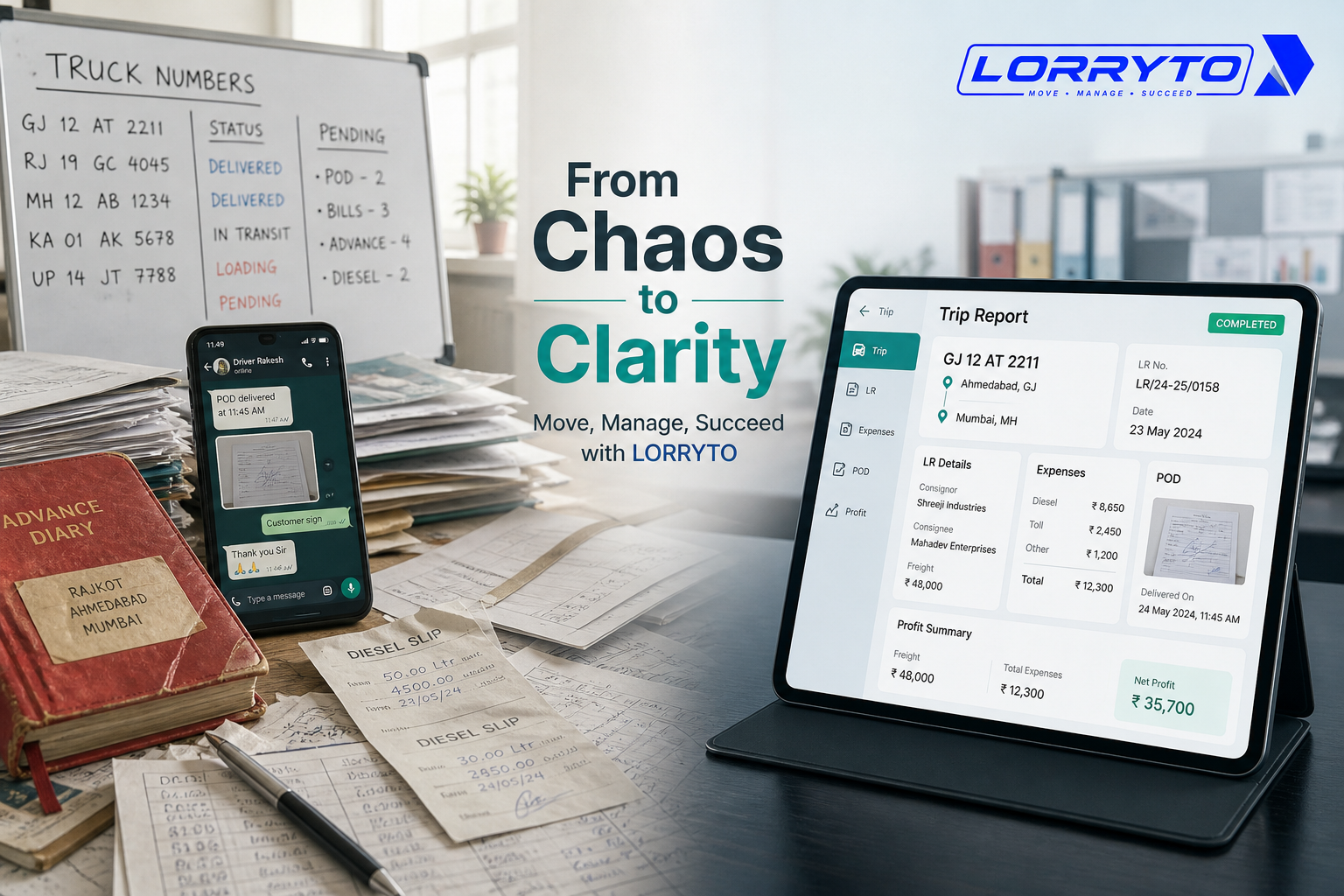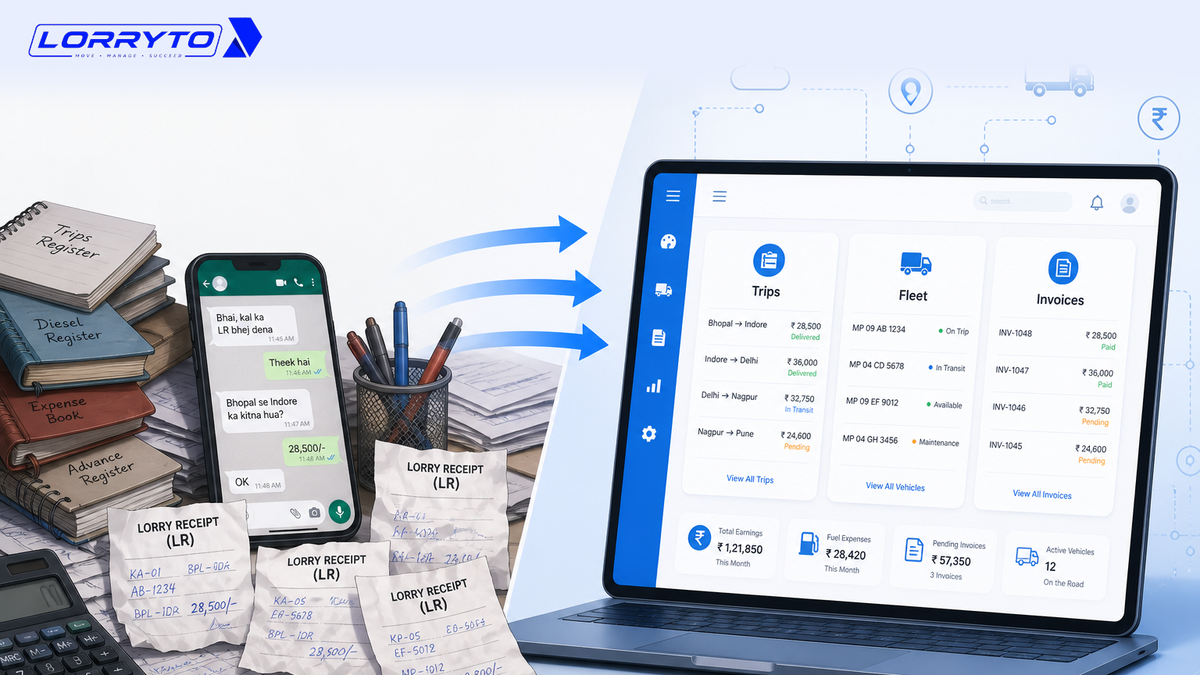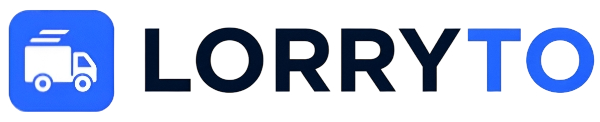
Managing a fleet is not only about keeping trucks on the road. It is about making sure every vehicle, every trip, every expense, and every payment helps your transport business earn more.
When you grow, notebooks, spreadsheets, phone calls, and WhatsApp chats stop working well. More vehicles, drivers, trips, customers, suppliers, and expenses mean more information to track.
The real challenge is not just managing more trucks.
It is knowing whether those trucks are actually making money.
Modern fleet software helps you bring vehicles, trips, expenses, drivers, documents, billing, payments, and profit into one connected system.
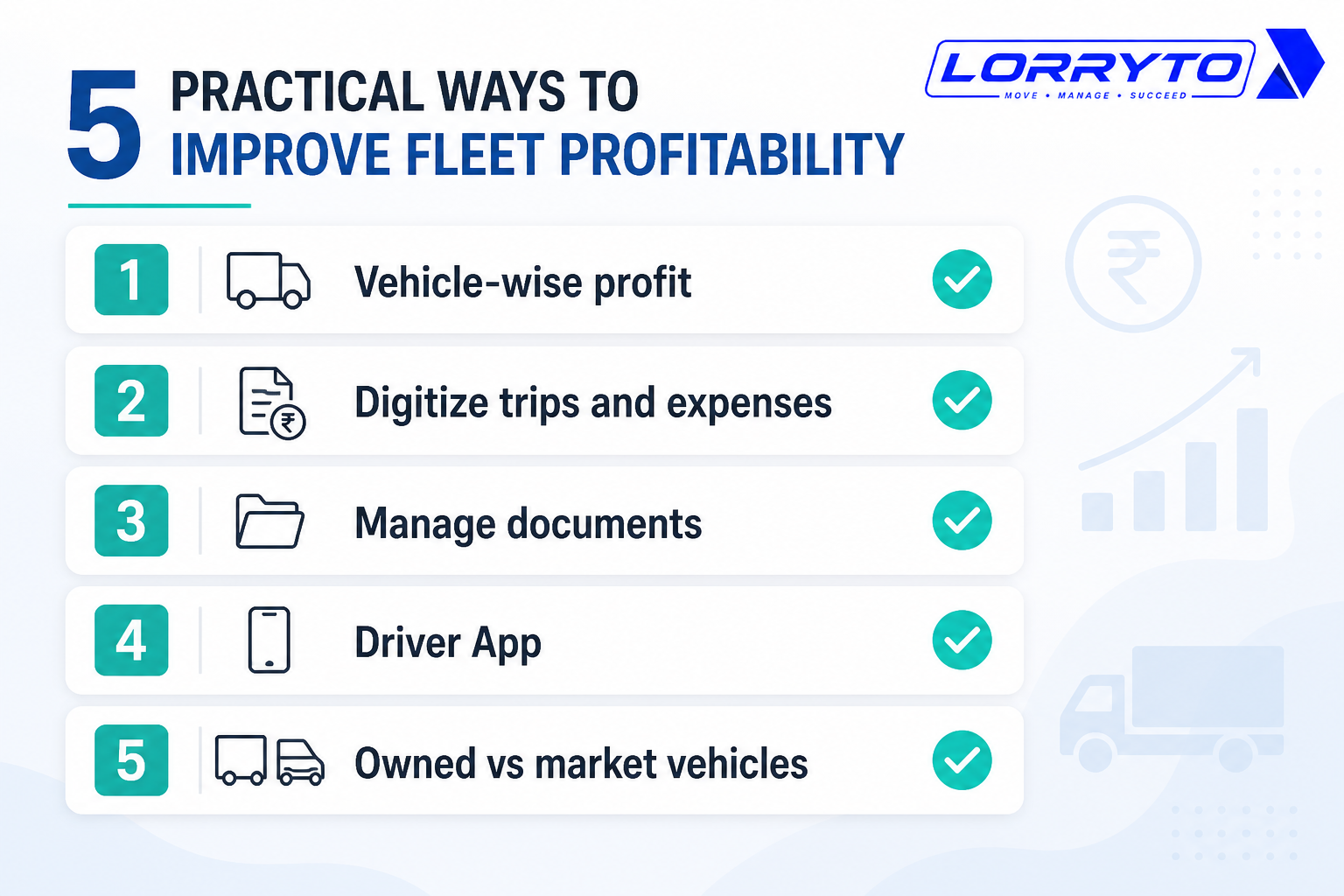
This article covers 5 practical ways to improve fleet management and make your transport business more profitable — with tools like Lorryto.
Common fleet management challenges
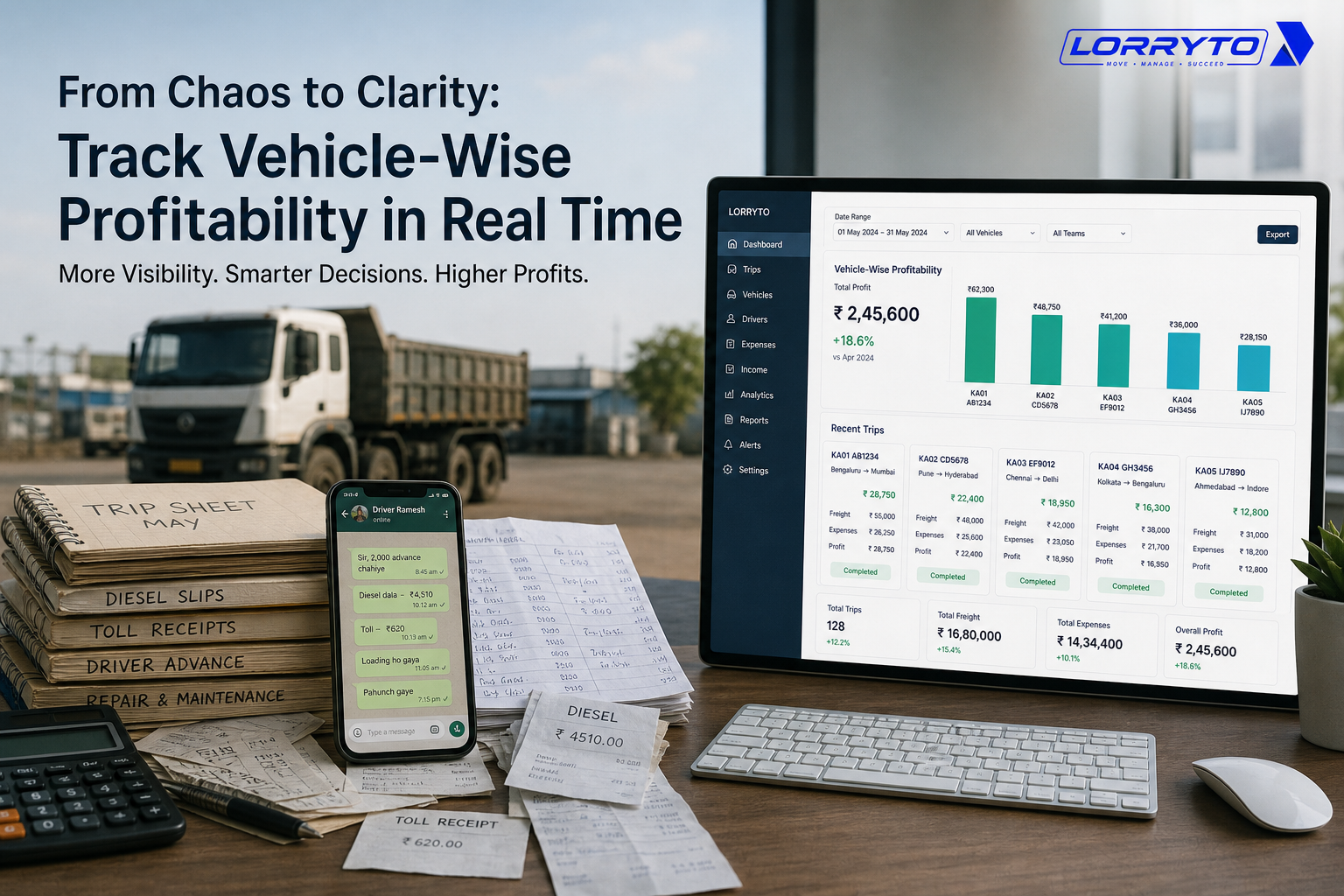
Before the solutions, here are problems many transporters face.
1. Hard to see vehicle profit
A truck may run often and earn freight — and still not be profitable.
Fuel, tolls, maintenance, driver costs, advances, and other expenses can cut into the trip. If revenue and costs sit in different places, you cannot see how each vehicle is really doing.
2. Too much manual record-keeping
Every day you deal with LRs, trip details, driver payments, expenses, invoices, PODs, supplier payments, vehicle documents, and customer outstanding.
When that lives in registers, Excel, and WhatsApp, finding the right answer wastes time.
3. Vehicle and driver documents are hard to track
Insurance, RC, permits, fitness, PUC, driving licences, and other papers expire. Missing a date can create operational and compliance trouble.
4. No real-time visibility
You need quick answers:
- Where is my truck?
- Which driver is on the trip?
- Which trips are active?
- How much has a vehicle earned — and cost?
- Which trips are pending?
- How much money is outstanding?
On paper, each answer may need several calls and checks.
5. Market vehicles and suppliers are messy
Many businesses mix owned trucks and market (hired) vehicles.
When you hire an outside truck, you must track customer freight, supplier freight, advances, payments, and margin. Without clear records, those trips are hard to judge.
How can fleet management get better?
More registers are not the answer.
Digitize the fleet and connect the data you already create. A modern system helps you manage vehicles, drivers, trips, expenses, documents, suppliers, invoices, payments, and profit from one platform.
Here are five practical ways.
1. Track vehicle-wise revenue, expenses, and profit
The most important step toward a profitable fleet is knowing how each vehicle performs.
Looking only at total freight can mislead you.
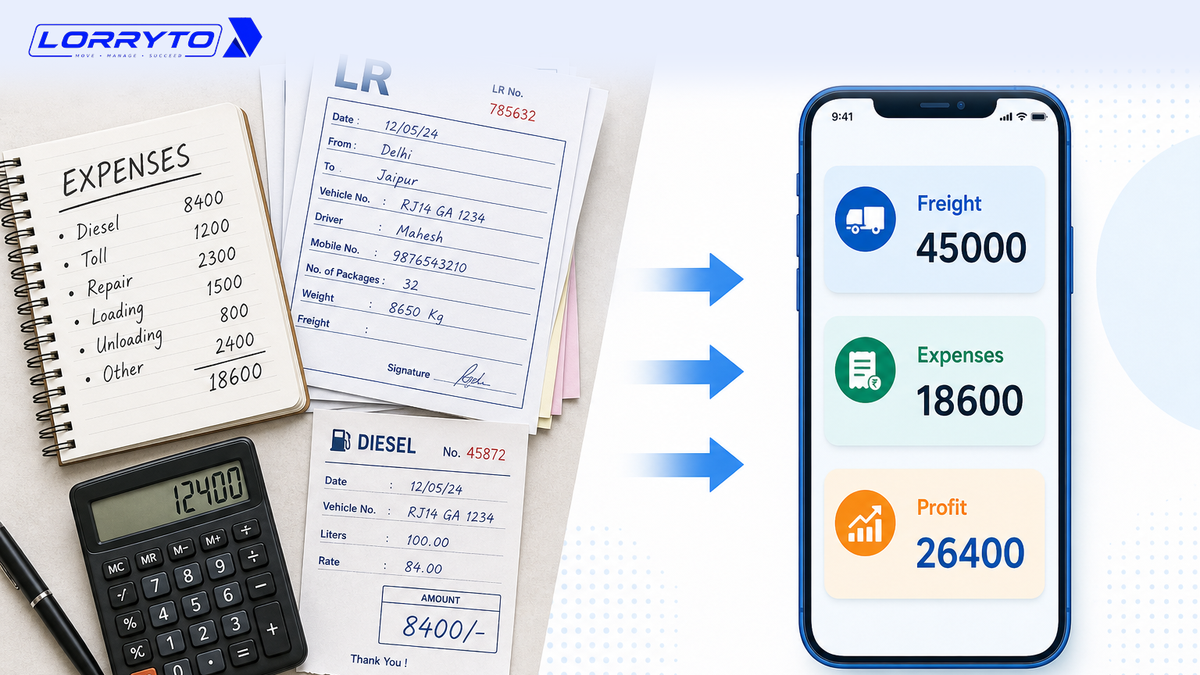
Suppose your fleet earns ₹10 lakh in freight in a month. That sounds strong. After fuel, tolls, maintenance, driver costs, and other expenses, real profit may be much lower.
One truck may earn better margins than another. Without vehicle-wise numbers, you may never see that.
Lorryto gives fleet-level visibility into revenue, expenses, and profitability. You can see how each truck contributes.
You can track things like:
- Vehicle-wise revenue
- Vehicle-wise expenses
- Vehicle-wise profit or loss
- Number of trips
- Owned vs market vehicles
- Vehicle-related expenses
- Trip performance
That helps you answer:
- Which truck makes the most profit?
- Which vehicle has high expenses?
- Which truck is underperforming?
- How much revenue did one vehicle bring in?
- What is profit after expenses?
Fleet management then means managing vehicle profit, not only tracking trucks.
For trip-level profit after costs, see How to manage every trip profit digitally and Trip Profit on View LR.
Don’t just know where your trucks are. Know what they are earning.
2. Digitize trip and expense management
Every trip creates money movement: freight income, fuel, tolls, driver costs, maintenance, advances, market vehicle freight, and other expenses.
On paper, trip cost is slow and easy to get wrong. A missing expense makes a trip look better than it is. A forgotten advance leaves a wrong balance.
Digitize the full trip record.
On Lorryto, trips connect to vehicles, drivers, parties, expenses, documents, invoices, and settlement. Vehicle expenses such as fuel, tolls, repairs, and maintenance feed into the vehicle’s financial picture. Drivers can also send trip updates and expenses through the Lorryto Driver App, so less information gets stuck in WhatsApp.
Why does this help profit? You cannot control costs you cannot see.
When expenses sit on the right trip or vehicle, you see where money goes. More detail: How to manage every trip’s expenses digitally and Trip expenses.
3. Manage vehicle documents before they become a problem
A healthy fleet is not only trucks that run. The papers behind them must stay valid.
You may need to track:
- Registration Certificate (RC)
- Insurance
- National Permit
- Road Tax
- Fitness Certificate
- Pollution Certificate
- Other permits and vehicle papers
Keeping expiry dates in a notebook means someone must remember to check. That does not scale.
Digitize vehicle documentation.
On Lorryto, vehicle records can hold RC, insurance, and other compliance details so upcoming expiries are easier to see. Your team opens the vehicle record instead of digging through physical files.
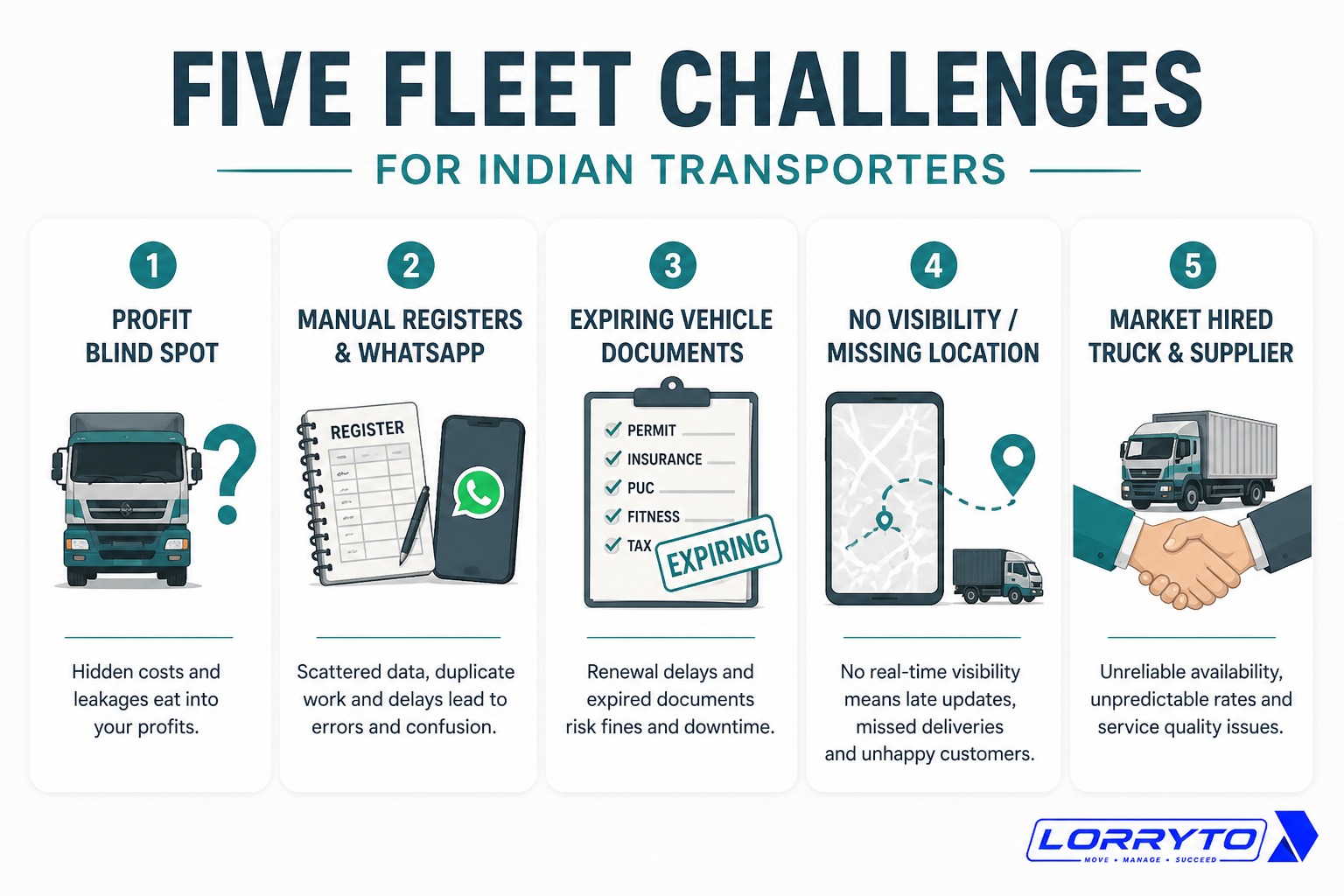
Vehicle → Documents → Expiry → Digital record — everything stays connected.
You get less paperwork, faster retrieval, clearer renewals, and lower risk of missing dates. Related: How to manage transport documents without files and the vehicles list.
4. Give drivers the right digital tools
The office manages the fleet well only when information moves quickly between the desk and the road.
The old loop looks like this: office calls driver → driver updates → office writes it down → driver sends a file on WhatsApp → someone downloads and stores it. Across dozens of trips, that wastes time.
Drivers should join the digital workflow.
Lorryto Driver App
The Driver App lets drivers see assigned trips, update trip information, record expenses, and upload delivery documents from their phone — including POD and trip images. It supports Hindi and English, so more drivers can use it with less friction.
Why does this matter for profit? Faster information means faster action.
When the office gets trip updates, expenses, and PODs without long delays, billing and settlement move sooner. When files sit on the trip, staff spend less time searching chats. For delivery proof specifically, see Digital POD management.
5. Manage owned and market vehicles separately
Not every transporter runs only own trucks. Market vehicles are common in India.
You may take a customer booking and fulfill it with a hired truck. That creates two sides of the same trip:
- Customer freight → your revenue
- Supplier freight → your cost
The gap is your margin.
On paper, advances, balances, supplier payments, and real profit are easy to lose.
Digitize supplier and market vehicle management.
Lorryto helps you connect hired/market vehicle trips with supplier records so you can track trips, freight, advances, payments, and pending balances.
You see a clearer picture:
Customer freight − supplier cost = your margin
You get better supplier payment control, clearer trip margins, better cash-flow visibility, easier reconciliation, and better decisions about which business to take next.
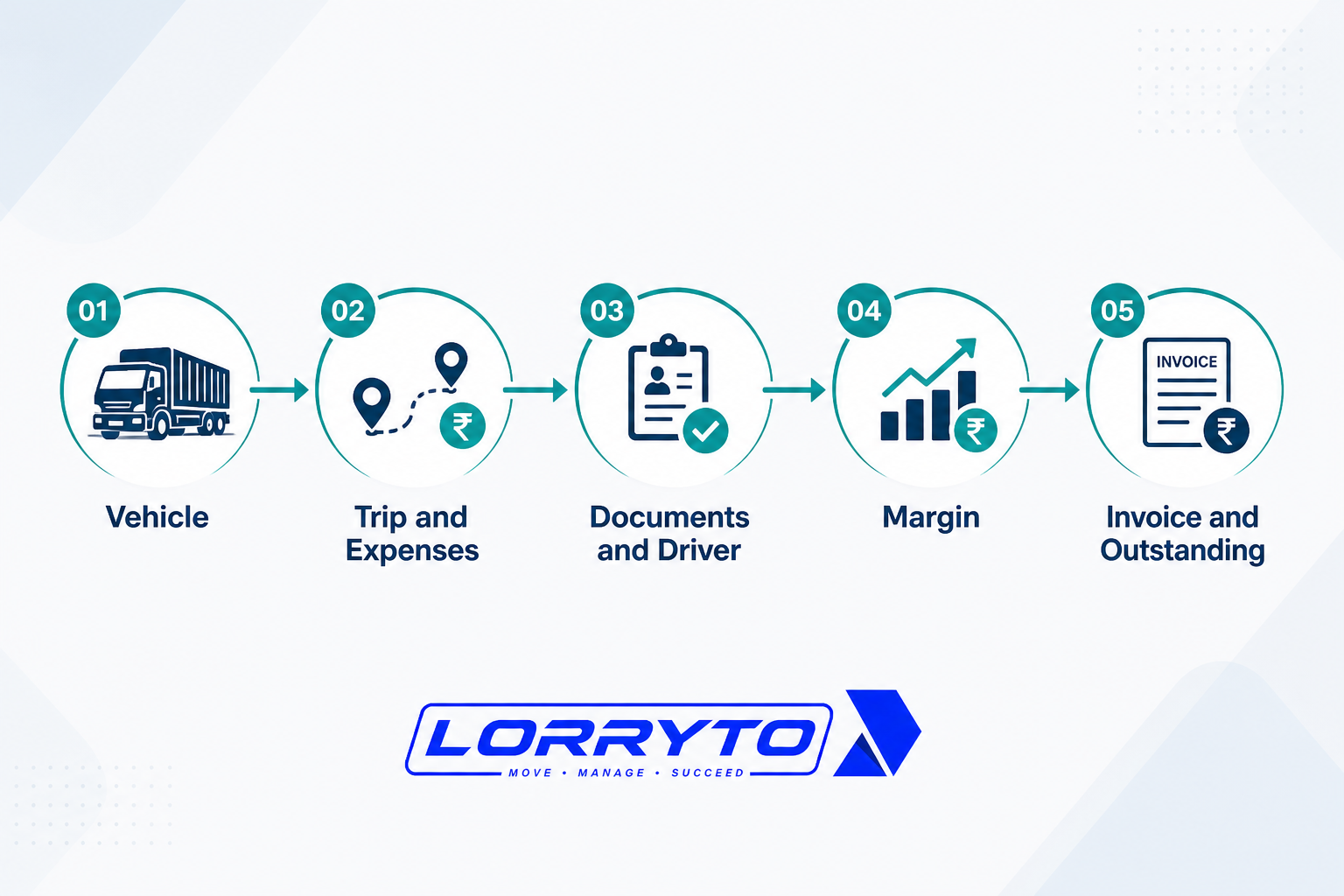
Bonus: Connect fleet management with billing and outstanding
Managing the fleet is one side. Getting paid is the other.
A finished trip does not mean money is in the bank. You may have completed trips, pending PODs, unbilled LRs, invoices, partial payments, outstanding balances, and supplier payments.
If those records are separate, cash flow is hard to manage.
Lorryto connects the operational and financial workflow. LR information can flow into billing. Party ledgers can show invoices, payments, advances, and outstanding.
A useful flow:
Booking → LR → Trip → POD → Invoice → Payment → Outstanding
That is stronger than keeping every register alone. Start with Create invoice and the big-picture digitization guide: Why digitization is transforming transport in India.
Fleet management is no longer just tracking trucks
Earlier, fleet management often meant: “How many trucks do I have?”
Today you also need answers like:
- Where are my vehicles?
- What trips are they running?
- What are they earning and costing?
- Which trucks are profitable?
- Which drivers handle which trips?
- Which documents are expiring?
- How much do I owe suppliers — and how much do customers owe me?
- Which trips need settlement?
- Where is the business actually making money?
That is the difference between tracking a fleet and managing a profitable fleet.
Why choose Lorryto for fleet management?
Lorryto is built as an end-to-end transport platform for modern logistics businesses.
Instead of one tool for vehicles, another for expenses, spreadsheets for profit, and WhatsApp for documents, Lorryto brings the core workflow together:
- Fleet and vehicles — operational and financial performance
- Trip management — create, track, and settle trips
- Driver management — profiles, trips, expenses, advances
- Vehicle expenses — fuel, toll, maintenance, and more
- Documents and compliance — store papers and watch expiry
- Supplier management — market vehicles, payments, balances
- Billing and invoices — bill from transport records
- Outstanding — invoices, payments, pending balances
- POD — proof of delivery on the trip
- Profit and loss — revenue, expenses, and profitability
- WhatsApp sharing — share documents digitally
- Multi-branch — grow across locations
These map to Lorryto’s current transport management features. See getting started and Trips.
The future of fleet management is profitable fleet management
Software should not only help you keep more records. It should help you make better decisions.
A modern fleet system gives visibility to understand vehicles, control expenses, organize documents, manage drivers, monitor trips, follow payments, and measure profit.
The goal is not only: “How many trucks can I manage?”
It is: “How efficiently and profitably can I manage them?”
When data is connected, decisions get faster. When expenses are visible, costs are easier to control. When trips are organized, operations are easier. When you know real profit, you plan the fleet better.
Start managing your fleet smarter with Lorryto
You do not need a huge fleet to start digitizing.
Whether you run a small fleet or a growing operation, bringing vehicles, drivers, trips, expenses, documents, suppliers, invoices, payments, and profit into one system makes daily work easier.
Manage your fleet. Control your costs. Understand your profit.
That’s the power of Lorryto.
Lorryto — Transport Operations, Re-engineered.
References and next reads: Trip report digitally · Why digitization is transforming transport · Trip profit digitally · Trip expenses digitally · Trip closing digitally · Transport documents without files · Digital POD · Paperless transport office · Getting started · Trips · Create LR · Trip expenses · Edit trip / Trip Profit · Vehicles list · Driver mobile app · Suppliers · Create invoice · Parties
Ready to run trips without registers?
Create LRs, track payments, and keep documents in one place with Lorryto — free trial available.
Start Free Now