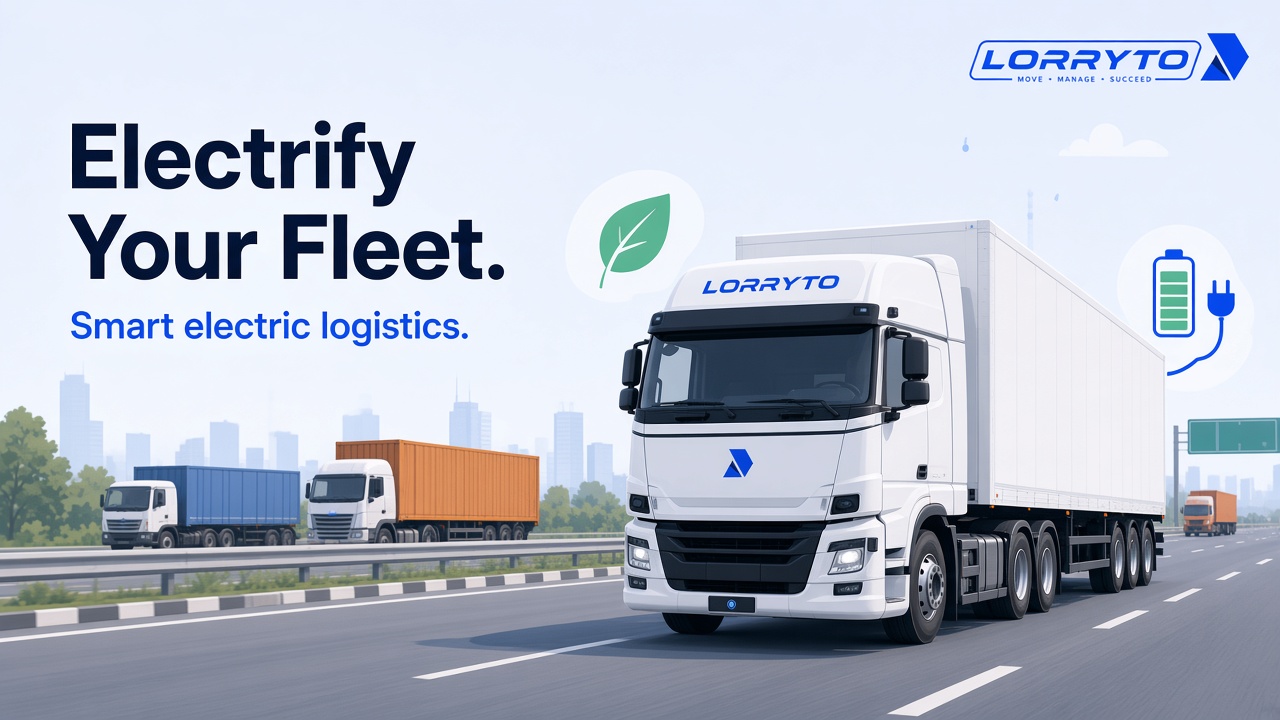
India’s freight and logistics sector is moving into an important new phase of electrification.
On 7 September 2026, the 5th e-FAST India Summit in New Delhi brought together policymakers, logistics companies, vehicle manufacturers, financiers, charging infrastructure providers and other stakeholders to discuss what comes next for zero-emission freight in India.
One of the major announcements was the launch of the Platform for Aggregating Clean Transport (PACT) by NITI Aayog under the e-FAST India initiative. Alongside PACT, the summit also introduced the ZET Marketplace, aimed at connecting businesses across the zero-emission trucking ecosystem.
According to the Press Information Bureau, the new platform will aggregate freight demand across India through continuous engagement with ecosystem stakeholders to facilitate scaled deployment and strengthen the commercial case for zero-emission trucks.
The significance of these initiatives goes beyond simply putting more electric trucks on Indian roads. The larger challenge has always been how to make electric freight work commercially at scale.
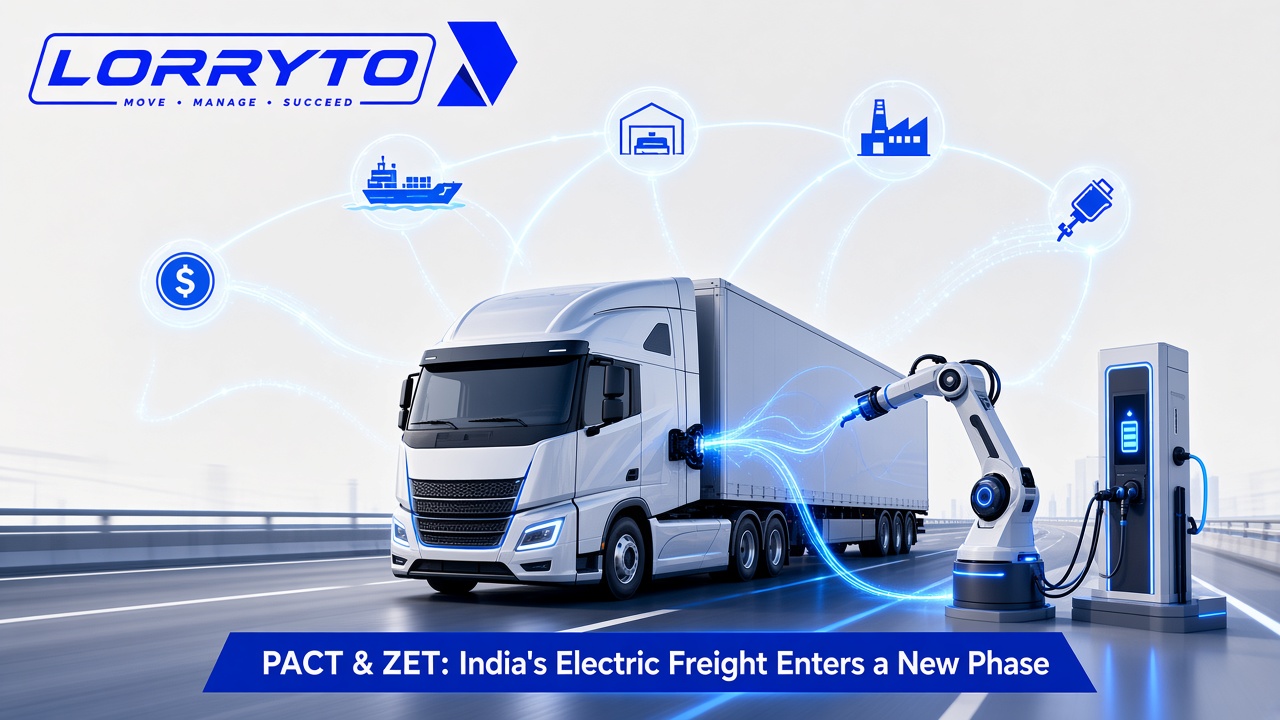
From EV pilots to a coordinated freight ecosystem
Electric passenger vehicles have received considerable attention in India, but electrifying medium- and heavy-duty freight vehicles is a different challenge.
A truck does not operate in isolation. Its economics depend on the route, load availability, utilisation, charging access, financing, turnaround time and operating costs.
This is where PACT is intended to play a role.
According to e-FAST India, PACT is designed to aggregate freight demand from shippers and logistics service providers operating on similar freight corridors. That demand can then be brought together to create more commercially credible opportunities for electric truck deployment.
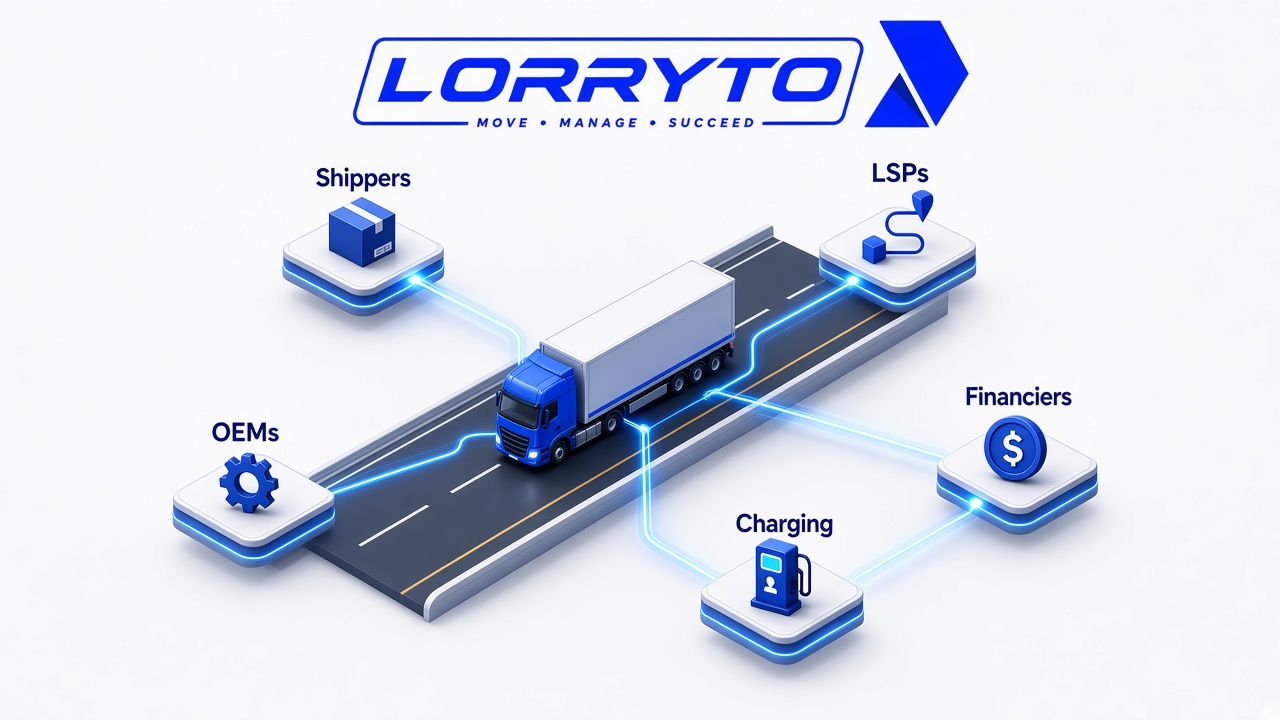
PACT describes itself as a coordinated platform for electric medium- and heavy-duty truck projectization, bringing together shippers, logistics service providers, vehicle manufacturers, charging infrastructure operators, financiers and government agencies.
In practical terms, the idea is relatively straightforward: instead of individual companies trying to solve every part of the electrification puzzle independently, multiple stakeholders can be brought together around specific freight corridors.
- Shippers can provide demand
- Logistics operators can provide fleet and operational requirements
- Truck manufacturers can bring vehicles
- Charging operators can plan infrastructure
- Financiers can evaluate projects
- Technology providers can support operations
That coordination becomes increasingly important as electric trucking moves beyond early demonstrations — a shift we also explored in Electric Trucks Are Leaving the Pilot Stage.
The numbers show that the market is moving
The growth in electric freight deployment is already visible.
According to the PIB release, e-freight vehicle deployments increased from 201 vehicles in FY25 to 826 vehicles in FY26 — more than a fourfold increase. The government also stated that more than 3,000 electric medium- and heavy-duty trucks are currently operating across India.
These numbers are still small compared with India’s overall commercial trucking fleet, but they indicate that electric freight is moving from a purely experimental stage towards early commercial adoption.
The next question is therefore not simply whether electric trucks can operate.
It is whether they can operate profitably, reliably and at scale.
Why freight corridors matter
For commercial trucking, route predictability can make a major difference.
A vehicle running repeatedly between known locations is easier to plan for than one operating randomly across a large geography. Charging requirements, turnaround times, vehicle utilisation and operating costs become easier to understand when the route and freight demand are relatively predictable.
PACT’s corridor-based approach is built around this principle.
The platform describes a process in which stakeholders register their requirements, freight demand is aggregated, and potential partnerships are then facilitated between shippers, logistics providers, OEMs, charging operators, financiers and other participants.
This is particularly relevant because India’s electric freight transition is still dealing with fragmented pilots and infrastructure challenges.
A 2026 e-FAST India guidance framework on electrifying Indian highways highlights the need to move from fragmented demonstrations towards an ecosystem-level approach that combines infrastructure, technology, business models and operations. The framework draws on real-world experience from the Bengaluru–Chennai highway, including approximately 200,000 kilometres of operational demonstrations.
Corridor thinking also sits alongside India’s wider multimodal freight story — including the role of Dedicated Freight Corridors in reshaping how long-haul and first-/last-mile road transport interact.
Financing remains one of the biggest pieces of the puzzle
Buying an electric truck is only one part of the transition.
For fleet operators, the bigger calculation includes the total cost of ownership, financing terms, battery performance, charging costs, utilisation and the residual value of the vehicle.
The financing challenge is particularly important because the zero-emission trucking market is still developing.
Earlier e-FAST India research on financing India’s first 10,000 zero-emission trucks identified financing as one of the important areas requiring new approaches, including tailored lending products, risk-sharing mechanisms and innovative models such as vehicle and battery leasing.
This means better visibility into actual freight operations and vehicle utilisation can become increasingly valuable.
The more predictable the business case, the easier it becomes for operators and financiers to evaluate an electric truck deployment.
The ZET Marketplace adds another layer
The second major initiative introduced at the summit was the ZET Marketplace.
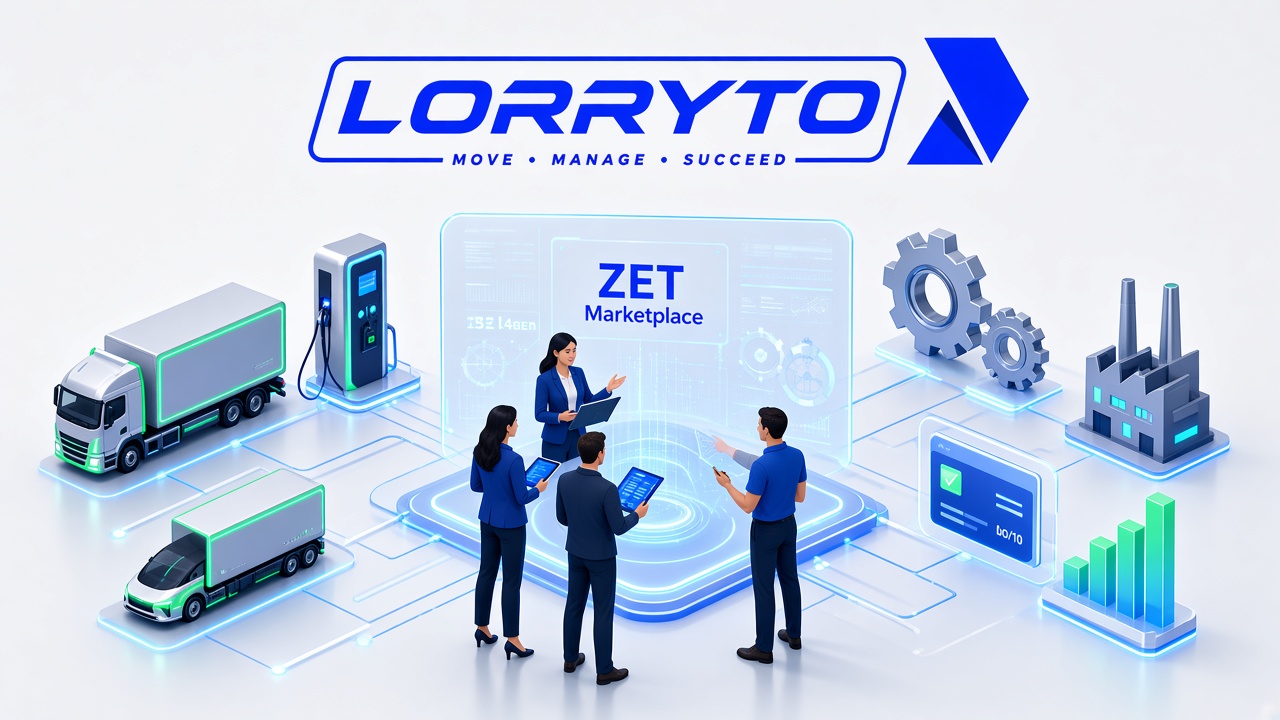
According to e-FAST India, the marketplace was designed as a national showcase for zero-emission freight solutions and as a platform for stakeholders to initiate commercial conversations. It is intended to bring together e-truck manufacturers, logistics service providers, charge point operators, financiers and technology companies so they can showcase solutions, explore commercial opportunities and develop partnerships.
This is an important development because electric freight is not going to be solved by vehicle manufacturers alone.
A successful electric freight operation may require a combination of:
- The right truck for the route
- Reliable charging infrastructure
- Sufficient freight utilisation
- Suitable financing
- Fleet and driver management
- Route and trip visibility
- Battery and vehicle monitoring
- Proper documentation
- Operational cost tracking
- A commercially sustainable business model
The ecosystem therefore needs to work together rather than treating electrification as simply a vehicle replacement exercise.
Where digital transport management can fit in
There is also a less visible part of this transition: operational data.
As fleets become more sophisticated, transport businesses need better visibility into where vehicles are operating, which trips are generating revenue, what expenses are being incurred and how efficiently individual vehicles are being utilised.
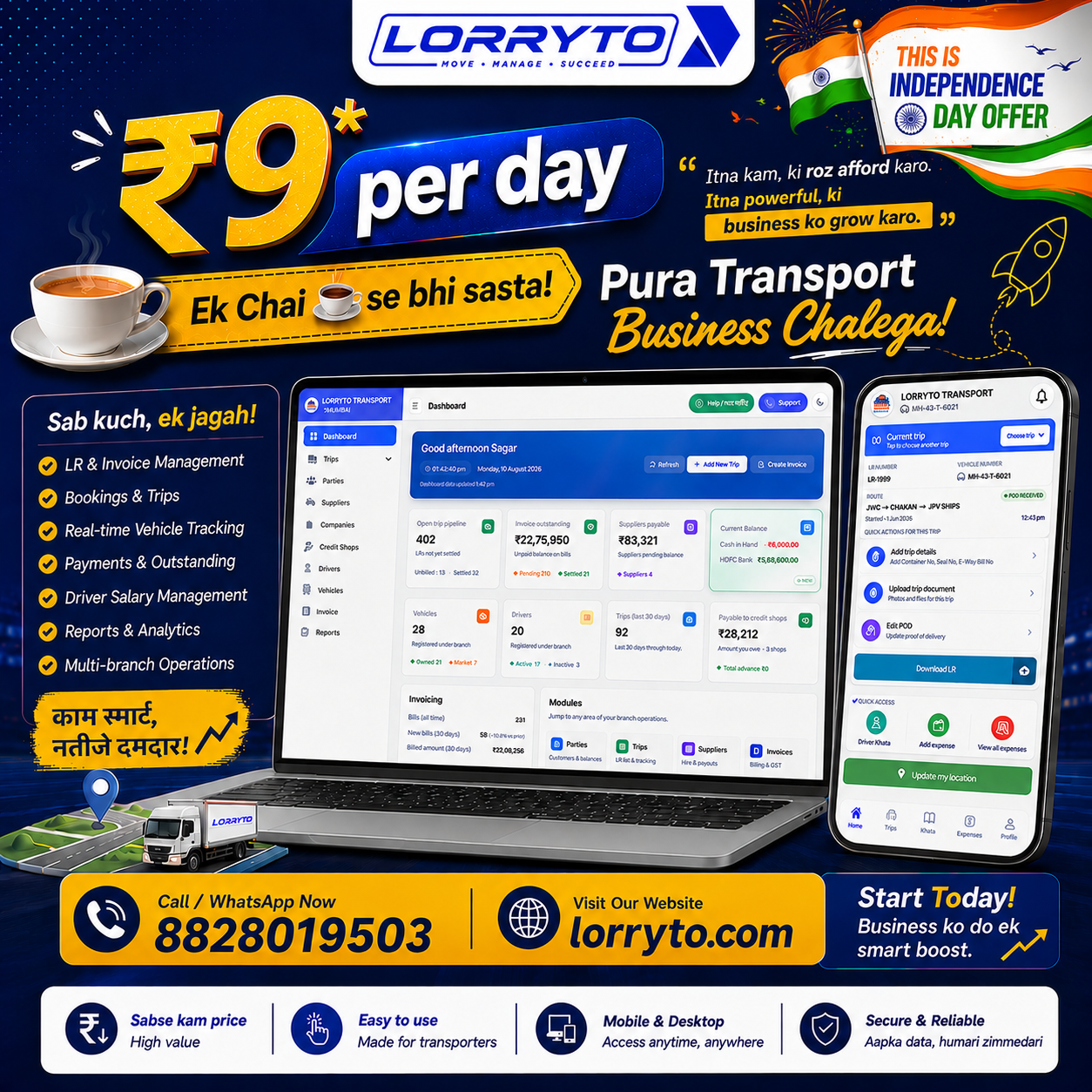
This is an area where digital transport management platforms such as Lorryto can support the broader transition — not by replacing the charging or financing ecosystem, but by helping transport operators manage the operational layer around their vehicles.
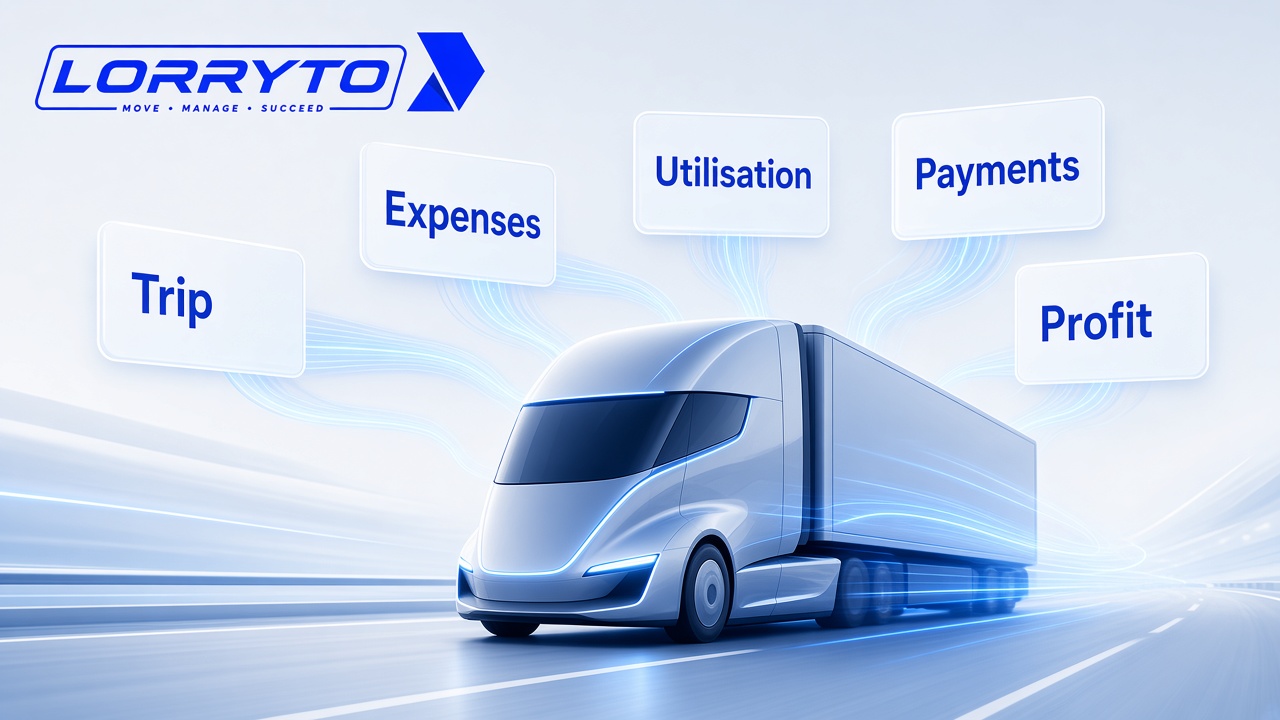
Trip management, vehicle tracking, digital documentation, expenses, payments and trip-level profitability can give operators a clearer picture of how their fleet is performing — the same foundation covered in digital trip tracking and vehicle expense automation.
For electric freight in particular, this type of operational visibility can become increasingly relevant as operators compare routes, utilisation and running economics before expanding an electric fleet.
For example, platforms such as Lorryto help transport businesses track vehicle locations when drivers share GPS and manage trip and vehicle-level revenue and expenses on the Vehicles list.
The important point is that electrification is ultimately an operations and business decision, not only a technology decision.
From intention to implementation
The theme of the 5th e-FAST India Summit was “Moving from Market Creation to Market Transformation.”
That reflects the broader change taking place in India’s electric freight discussion.
Earlier conversations around electric freight naturally focused on proving that the technology works.
The next stage is more demanding:
- Can enough freight demand be aggregated?
- Can charging infrastructure be deployed where it is commercially required?
- Can vehicles be financed on workable terms?
- Can operators achieve sufficient utilisation?
- Can the economics compete with conventional trucks on suitable routes?
- Can the entire ecosystem coordinate around actual freight requirements?
PACT is an attempt to address some of these questions by bringing demand and stakeholders together around identifiable freight corridors. The ZET Marketplace adds another mechanism for businesses to discover partners and commercial opportunities.
Neither initiative by itself solves every challenge facing electric trucking. But together, they point towards a more coordinated approach — and they sit within a wider policy climate that increasingly treats logistics digitalisation and sustainability as connected priorities, including themes discussed in the BRICS Transport Ministers’ Declaration 2026.
What this could mean for India’s trucking industry
For transporters and fleet operators, the electric transition will likely be gradual rather than an overnight replacement of diesel trucks.
Different routes and applications will have different economics.
High-utilisation and predictable routes may provide more suitable opportunities for early electric deployment, while other segments may require further development in vehicle technology, charging infrastructure or financing.
This makes data and operational visibility increasingly important.
The transport companies that understand their trip economics, vehicle utilisation, expenses and route patterns will have a stronger factual basis for deciding where and when electrification makes sense for their own operations.
India’s freight sector is enormous, diverse and highly fragmented. Moving it towards zero-emission vehicles will therefore require more than new trucks.
It will require coordination between freight demand, vehicles, charging, finance, technology and day-to-day fleet operations.
The launch of PACT and the ZET Marketplace suggests that this coordination is now becoming a central part of India’s electric freight strategy.
The real test will be what happens next: how many corridor-based projects move from registration to implementation, how quickly financing and charging partnerships develop, and whether electric trucks can establish a commercially sustainable model for India’s transport operators.
That is where India’s electric freight story moves from possibility to business reality.
If you are still building the trip, expense and utilisation visibility that electrification decisions depend on — getting started with Lorryto is a practical place to begin.
Related reading
- Electric Trucks Are Leaving the Pilot Stage: Is India Ready for Electric Freight Corridors?
- India’s Freight Rail Network Is Changing Road Transport: What the Dedicated Freight Corridors Mean for Truckers
- BRICS Transport Ministers’ Declaration 2026: What It Means for Logistics and Transport
- How to Manage Every Trip Tracking Digitally for Indian Transporters
- How to Automate Your Transport Office: Vehicle Expenses
- Vehicles list — location, KPIs, and fleet visibility
Ready to run trips without registers?
Create LRs, track payments, and keep documents in one place with Lorryto — free trial available.
Start Free Now