For a long time, India’s road transport industry has carried a large part of the country’s freight.
Trucks move goods from factories to warehouses, ports to distribution centres, and manufacturers to customers. For many businesses, road transport has been the most flexible way to move cargo across the country.
But India’s freight network is changing.
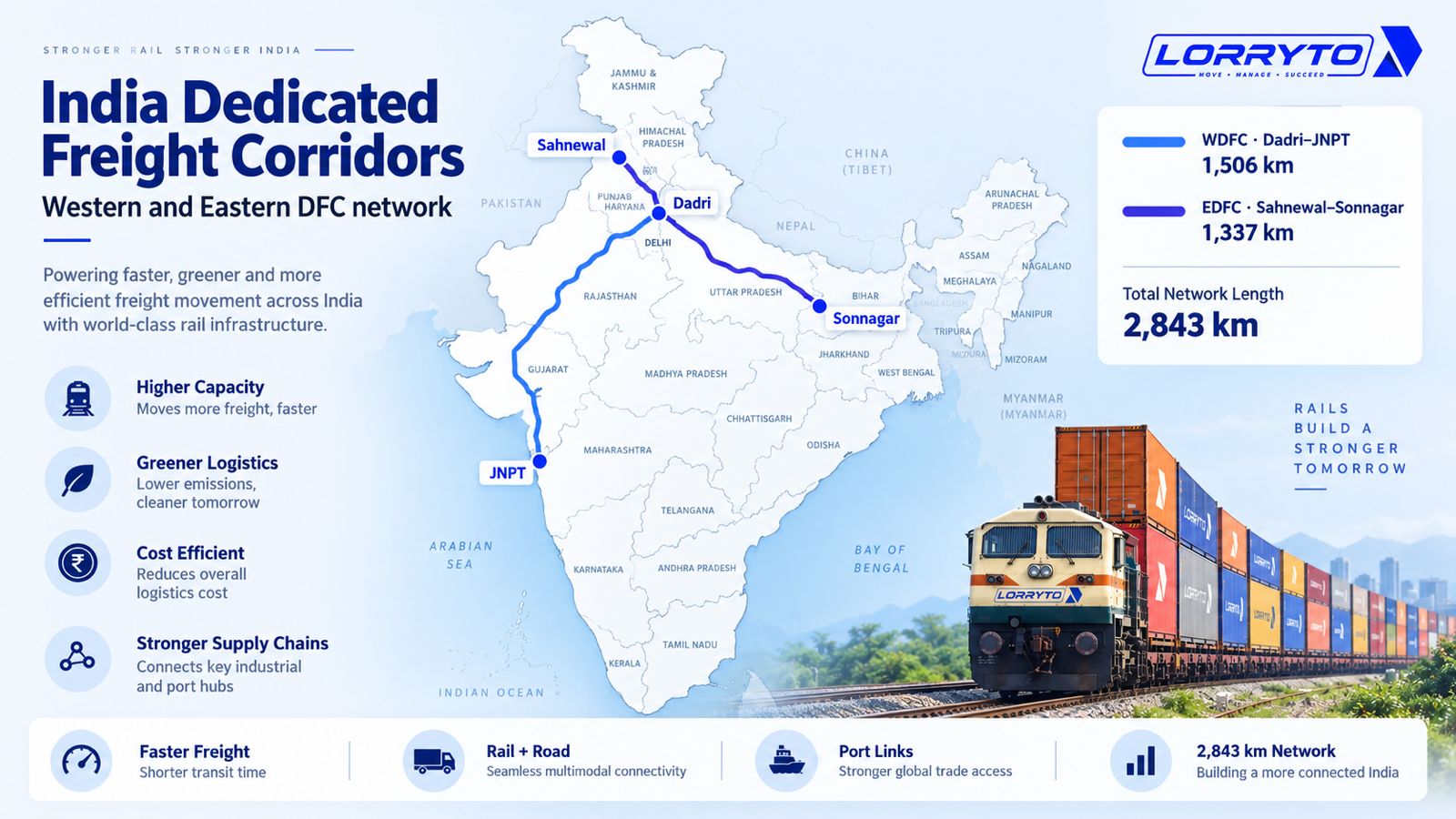
In September 2026, India completed and fully operationalised the Western Dedicated Freight Corridor (WDFC), connecting Dadri in Uttar Pradesh with Jawaharlal Nehru Port (JNPT) near Mumbai. The 1,506-kilometre corridor is now connected from end to end after the opening of its final sections between Gujarat and Maharashtra.
Together with the Eastern Dedicated Freight Corridor (EDFC), India now has a dedicated freight rail network stretching about 2,843 kilometres.
More than 400 freight trains are already running across these corridors every day. In August 2026, combined traffic on the two corridors averaged around 438 trains a day, close to 91% of their current combined capacity.
This is more than a railway development.
It could change how freight moves across India — and that means it could also change the role of the truck.
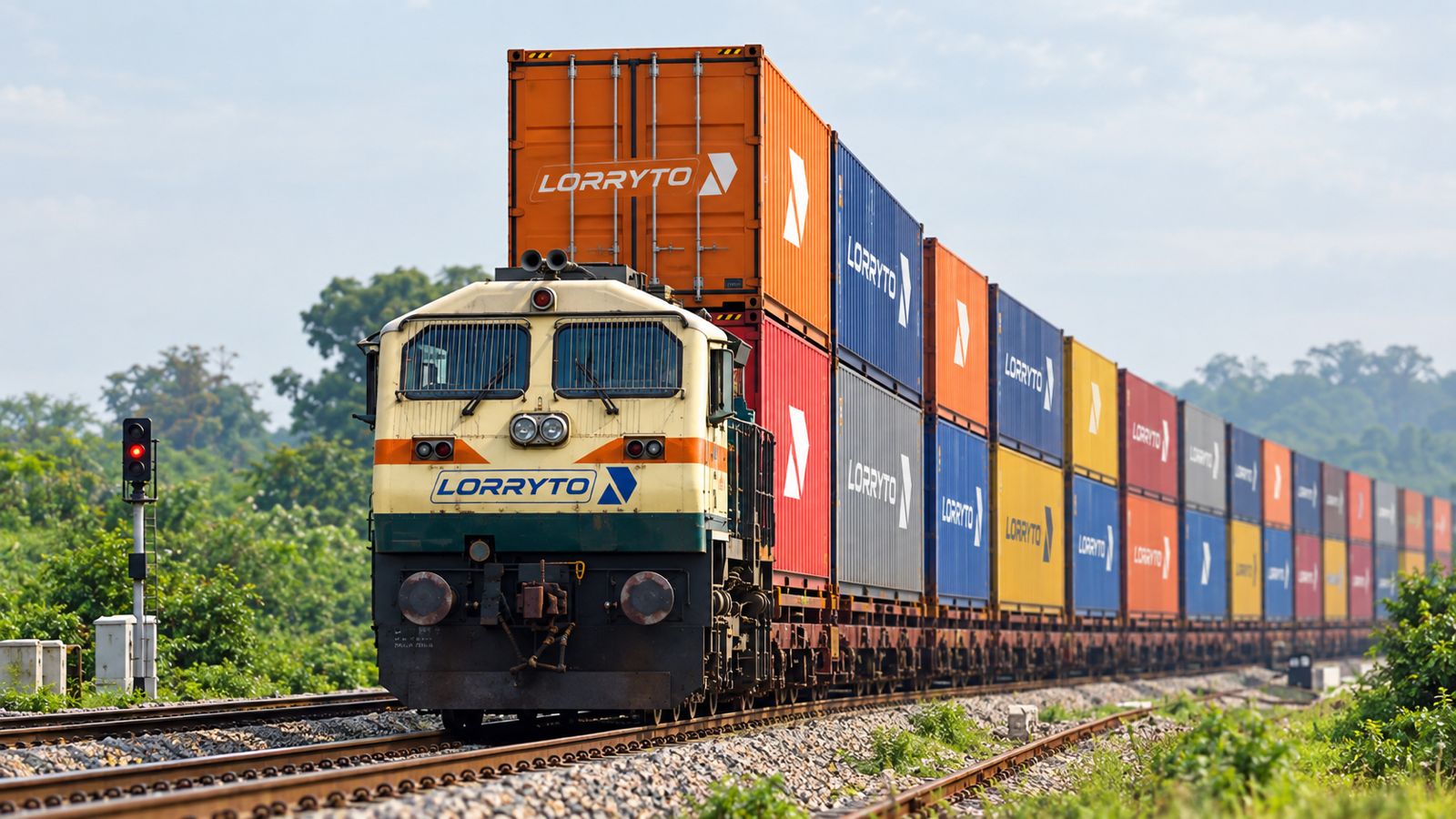
What is a Dedicated Freight Corridor?
A Dedicated Freight Corridor, or DFC, is a railway route built specifically for freight trains.
That may sound simple, but it makes a big difference.
On conventional railway routes, passenger trains and freight trains share the same network. Passenger trains have to be given priority in many situations, while freight trains have to work around the existing railway schedule.
A dedicated freight corridor changes that equation.
The infrastructure is designed specifically for moving goods. It allows longer and heavier freight trains to operate more efficiently and provides additional capacity for freight movement.
India currently has two major dedicated freight corridors:
- Western Dedicated Freight Corridor (WDFC) — about 1,506 km, connecting Dadri in Uttar Pradesh with JNPT in Maharashtra
- Eastern Dedicated Freight Corridor (EDFC) — about 1,337 km, connecting New Sahnewal in Punjab with New Sonnagar in Bihar
The two corridors serve different freight patterns. The Western corridor is particularly important for containerised and high-value freight moving between northern India and western ports, while the Eastern corridor has a strong role in moving bulk commodities such as coal and minerals.
The objective is not simply to put more trains on the tracks.
It is to make freight movement faster, more reliable and more efficient.
The Western Freight Corridor has just reached a major milestone
The most important recent development is the completion of the Western Dedicated Freight Corridor.
On September 8, 2026, the final sections of the WDFC were dedicated to the nation.
The three sections — New Sanand North–New Makarpura, New Umbergaon–New Saphale and New Saphale–New JNPT — together cover 326 kilometres and were built at a cumulative cost of around ₹20,703 crore.
The result is a continuous 1,506-kilometre freight route between Dadri and JNPT.
This matters because JNPT is one of India’s major container gateways.
A more direct rail connection between northern India’s manufacturing and distribution centres and the port can reduce the number of intermediate handling steps and make long-distance freight movement more predictable.
The New Saphale–JNPT section is particularly important because it completes the connection between the main freight corridor and JNPT, enabling more direct freight movement from Dadri towards the port.
For India’s logistics industry, this is a major change.
So, what does this mean for truckers?
This is the question that matters most to the road transport industry.
If more freight moves by rail, does that mean fewer trucks?
The answer is yes in some areas — but not in the way many people might think.
Some long-distance road freight can shift to rail, particularly where cargo is moving between locations connected efficiently by the DFC network.
But the truck is not disappearing.
Instead, its role can change.
Consider a simple example.
Earlier, a shipment might travel:
Factory → Truck → 1,200 km → Customer
With a stronger rail freight network, the movement could increasingly look like:
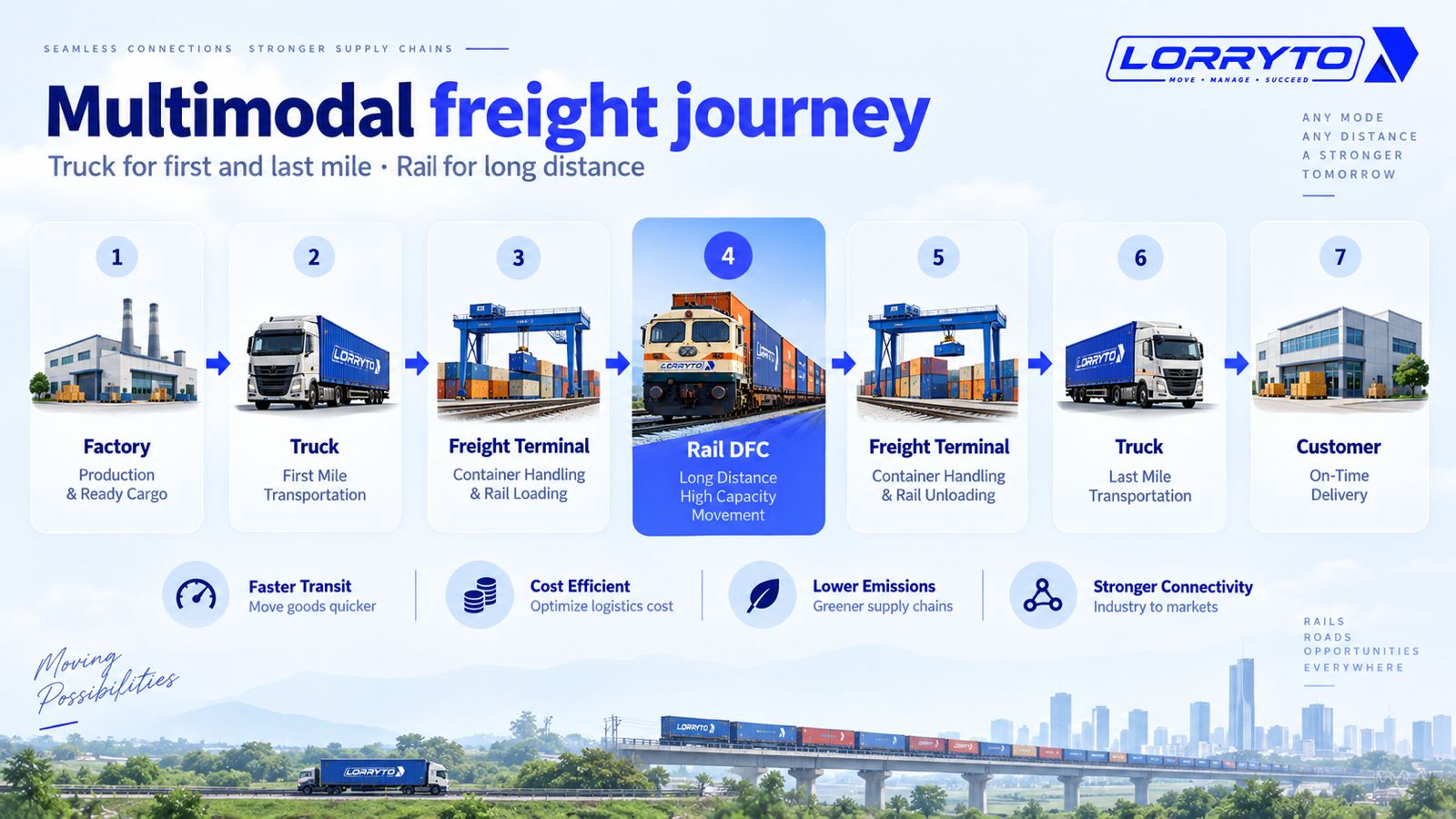
Factory → Truck → Freight Terminal → Rail → Freight Terminal → Truck → Customer
The truck handles the first and last parts.
The railway handles the long-distance middle section.
This is the basic idea behind multimodal transportation.
And it could become increasingly important in India.
Road and rail are not always competitors
It is easy to think of road and rail as competing for the same freight.
In reality, they can work together.
Road transport has one major advantage: flexibility.
A truck can reach a factory, warehouse, shop, construction site or customer’s premises directly.
Rail does not have that same flexibility.
A train needs a terminal, siding or freight facility.
This means rail is particularly useful for moving large volumes over long distances, while trucks remain important for connecting individual businesses to the rail network.
That creates a natural division of work.
Rail can handle
- Long-distance freight
- Large cargo volumes
- Container movement
- Bulk commodities
- Predictable freight corridors
Trucks can handle
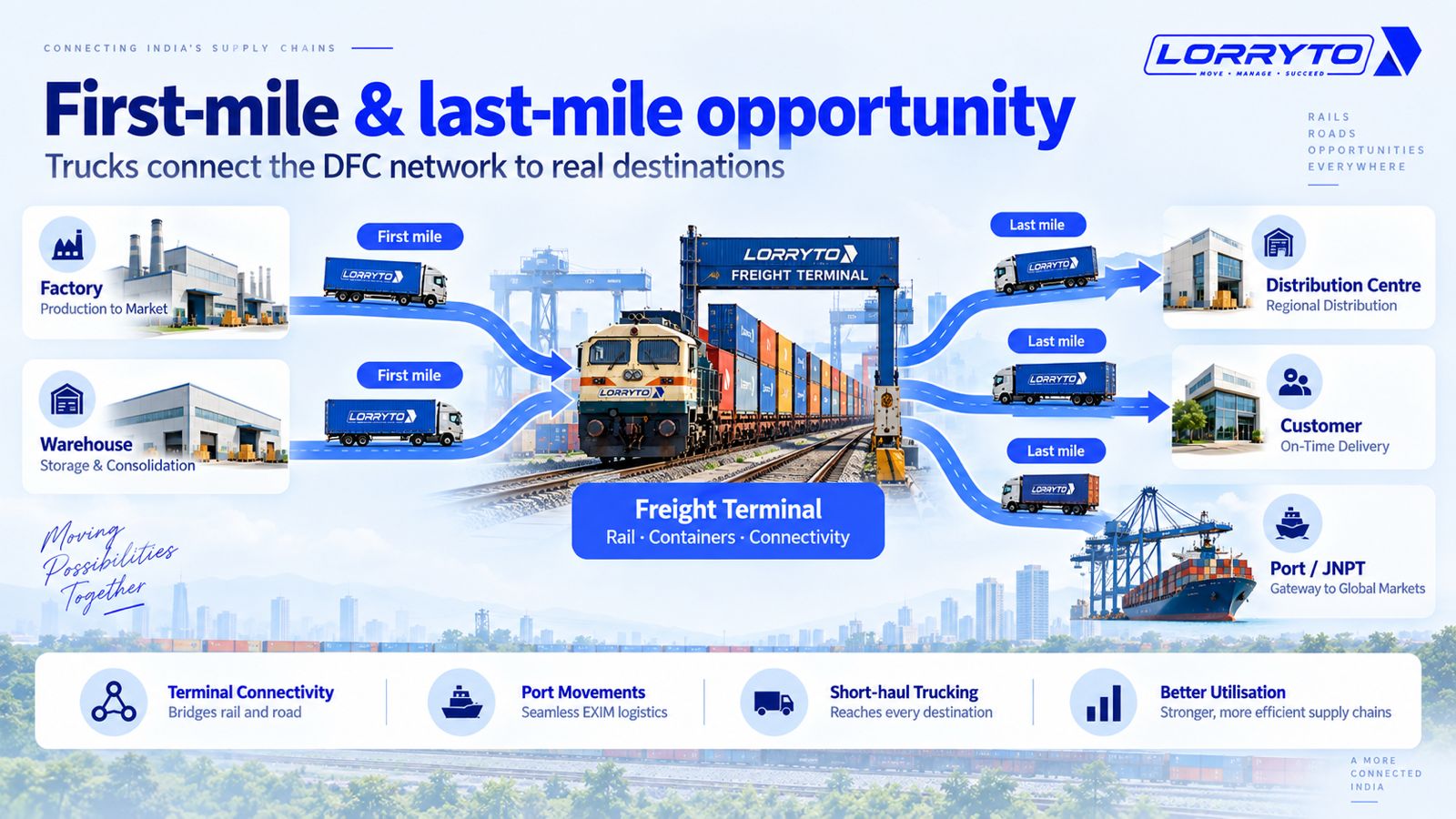
- First-mile movement
- Last-mile movement
- Factory-to-terminal transportation
- Terminal-to-warehouse movement
- Port-to-customer movement
- Regional distribution
The future may therefore be less about road versus rail and more about road plus rail.
India’s freight model could become more multimodal
India has been trying to increase the role of rail in freight transportation.
The National Rail Plan has targeted increasing rail’s share of freight from around 27% to 45% by 2030. Dedicated Freight Corridors are one of the important measures being used to increase railway freight capacity and improve the economics of moving goods by rail.
The DFC network is a major part of that strategy.
But increasing rail’s role does not mean removing road transport from the equation.
Instead, it can create a more connected freight network.
Think about how a container might move.
Manufacturer → Local truck → Freight terminal → DFC → Port → Ship
Or in the opposite direction:
Port → DFC → Freight terminal → Truck → Warehouse → Customer
The truck remains present.
It simply does not have to do the entire journey.
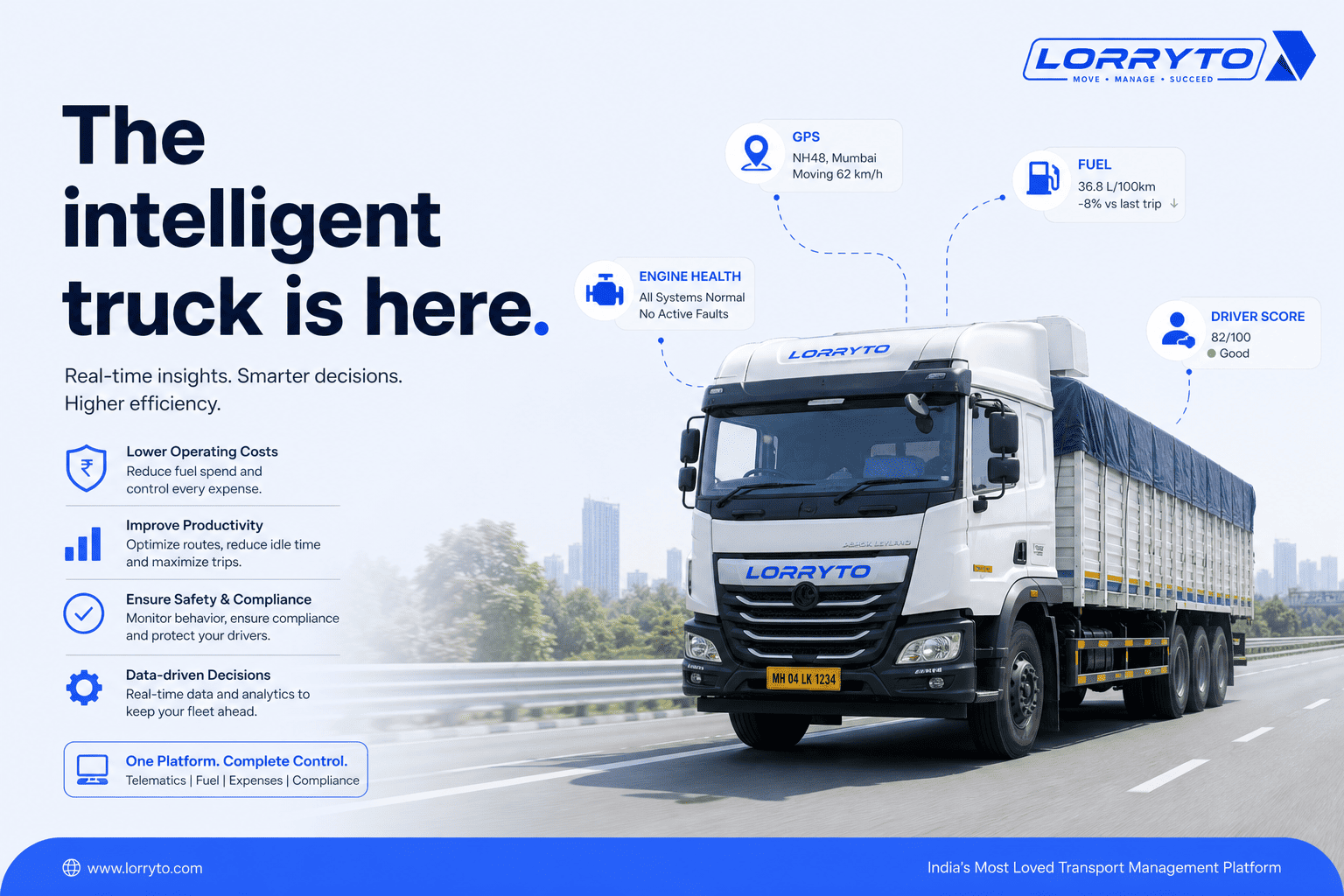
That can be an important shift for transporters — and it sits alongside other corridor-scale changes already reshaping Indian logistics, from electric freight corridors to more connected, intelligent trucks.
What happens to long-distance trucking?
Long-distance trucking will continue to have an important role, especially on routes where rail does not offer a practical alternative.
But on certain high-volume corridors, road transporters may face more competition from rail.
This could be particularly relevant for freight that:
- Travels long distances
- Has predictable origins and destinations
- Moves in large quantities
- Can be containerised
- Does not require frequent stops
- Has access to suitable rail terminals
For such freight, rail can become more attractive as DFC infrastructure improves.
This does not mean every long-distance truck trip will move to rail.
The economics will depend on distance, cargo type, loading and unloading requirements, terminal access, delivery schedules and the availability of suitable rail services.
That is why transporters should not look at DFCs simply as a threat.
They should look at where the new network can create an opportunity.
The opportunity for truckers: first and last mile
This could become one of the biggest opportunities created by the DFC network.
Rail can move freight efficiently over hundreds or thousands of kilometres.
But someone still needs to move that freight from the railway terminal to its final destination.
That is where trucks come in.
For example, a manufacturer located 80 kilometres away from a freight terminal still needs a truck.
A warehouse located 50 kilometres from a rail terminal still needs a truck.
A container arriving at a port still needs to reach its final destination.
This means the growth of freight rail can actually create more demand for specialised short- and medium-distance trucking services in certain locations.
The business model changes.
Instead of earning only from a 1,000-kilometre trip, a transporter could complete several shorter trips around a freight terminal.
The challenge is making those trips efficient.
Truck utilisation will become even more important
Shorter trips sound simple.
But they can also create new operational challenges.
A truck may spend more time waiting at a terminal.
It may arrive before the cargo is ready.
It may face congestion around a port or warehouse.
A vehicle that completes a short trip but spends several hours waiting may not actually be more profitable than a truck completing a longer trip.
This is where fleet management becomes important.
Transporters will need to understand not only how far a truck travelled, but how efficiently it was used.
They need visibility into:
- Vehicle location
- Trip status
- Waiting time
- Number of trips
- Revenue per trip
- Operating expenses
- Vehicle availability
- Overall profitability
This is also where a platform such as Lorryto can be useful. Its fleet tools provide live vehicle-location visibility when drivers share GPS, along with trip and vehicle-level revenue and expense information on the Vehicles list — helping transporters keep track of how their vehicles are being utilised.
For a transport business operating around ports, terminals and freight corridors, having this information in one place can make day-to-day planning easier — especially once digital trip tracking becomes the default rather than WhatsApp updates and notebooks.
DFCs could also change port logistics
The connection between freight corridors and ports is particularly important.
India’s ports handle huge volumes of imported and exported goods.
If containers can move more efficiently between ports and inland markets, the entire supply chain can benefit.
The completed WDFC is especially significant because it connects JNPT directly with the northern freight network.
This creates a stronger link between:
Port → Rail → Industrial Centres → Warehouses → Markets
For transporters, this can create new business opportunities around:
- Container pickup and delivery
- Port transportation
- Empty-container movement
- Terminal connectivity
- Warehouse distribution
- Short-haul container movement
At the same time, it can increase competition.
Transporters will need to provide reliable service, quick turnaround and better coordination to remain competitive.
Trucks-on-Trains: another sign of change
There is an interesting development that shows how road and rail can work together.
Indian Railways has been promoting Trucks-on-Trains (ToT) services through the Dedicated Freight Corridor network.
Instead of a truck travelling the entire long-distance route on the highway, the truck itself can be transported by rail for part of the journey.
This combines the flexibility of road transport with the long-distance efficiency of rail.
The Ministry of Railways describes the model as a way to shift the longest and most energy-intensive portion of truck journeys from road to electrified rail infrastructure. It can also help operators reduce exposure to highway tolls and improve cost predictability on suitable long-distance movements.
This is an important signal for the road transport industry.
The future may not require choosing between a truck and a train.
The same freight journey can use both.
What will happen to truck drivers?
This is another question that naturally comes up.
If more freight moves by rail, will there be less work for truck drivers?
The answer depends on how the industry evolves.
There could be fewer opportunities for some types of very long-distance trucking if cargo shifts to rail.
But there can also be greater demand for drivers working on:
- First-mile routes
- Last-mile routes
- Port movements
- Terminal connections
- Regional distribution
- Short-haul freight
The job itself may change.
Instead of spending several days on one long-distance trip, a driver may complete multiple shorter trips within a defined region.
For some transport businesses, this could also mean more predictable vehicle cycles and easier fleet planning.
The important point is that multimodal logistics does not eliminate road transport.
It changes where road transport adds the most value.
The challenge: India’s freight network still needs stronger connections
Building the DFC is only one part of the solution.
The railway line must connect effectively with factories, warehouses, logistics parks, ports and distribution centres.
If a freight train moves quickly for 1,000 kilometres but the cargo then waits two days at a terminal, some of the benefit is lost.
The same applies to trucks.
A truck may reach a terminal quickly but spend hours waiting for loading or unloading.
The future of logistics will therefore depend increasingly on the coordination between different modes — a theme that also appears as fleets become more connected and autonomous over longer horizons.
Rail speed alone is not enough.
Truck flexibility alone is not enough.
The entire journey needs to work.
What should transporters do now?
Transporters do not need to completely change their business overnight.
But they should start paying attention to how the freight network around them is developing.
A few practical steps can help.
1. Identify DFC-connected routes
Understand which customers, suppliers, ports and logistics hubs in your network are connected to the DFC system.
2. Look beyond long-haul trucking
Explore first-mile and last-mile opportunities around freight terminals.
3. Study your route profitability
A long trip is not automatically a profitable trip.
Calculate revenue, fuel, tolls, maintenance, driver costs, waiting time and other expenses.
4. Track waiting time
A truck that is moving for only six hours but waiting for ten hours is not being utilised efficiently.
5. Improve fleet visibility
Knowing where your trucks are and what they are doing becomes more important when you are coordinating with terminals, warehouses and rail schedules.
6. Build relationships with logistics companies
As multimodal freight grows, transporters may find new opportunities by becoming road partners for larger logistics networks.
7. Be ready for shorter, more frequent trips
The traditional model of one truck, one long-distance trip may not be the only profitable model in the future.
A new opportunity for smaller transporters
The DFC network could also create opportunities for small and mid-sized transport companies.
They may not have the scale to operate large long-haul fleets or participate directly in railway operations.
But they can provide the road connectivity that the multimodal network needs.
Imagine a freight terminal near a growing industrial area.
Large logistics companies may bring containers or bulk cargo to the terminal by rail.
Those goods still need to travel the final 30, 50 or 100 kilometres.
Local transporters can handle that movement.
This could create a new type of trucking business:
- Terminal-to-warehouse
- Warehouse-to-factory
- Port-to-distribution centre
- Factory-to-terminal
- Terminal-to-customer
These may be shorter trips, but they can become attractive if vehicle utilisation and turnaround are managed well.
India’s road transport industry is not disappearing
The DFC network will certainly change some parts of road freight.
There will be cargo that becomes more attractive to move by rail.
There will be routes where rail becomes more competitive.
And there will be long-distance truck movements that may gradually shift to multimodal models.
But India’s road network is too large and too flexible for trucks to disappear.
Factories are not all located next to railway stations.
Warehouses are spread across cities and industrial areas.
Customers are everywhere.
Road transport will remain the link that connects these locations.
The difference is that the truck may increasingly become one part of a larger freight journey, rather than carrying the shipment from origin to destination by itself.
The next phase of Indian logistics
India’s freight industry is moving towards a more connected system.
The completion of the Western Dedicated Freight Corridor is an important milestone in that journey.
With the Western and Eastern DFCs together covering about 2,843 kilometres and handling around 438 freight trains a day at roughly 91% of stated capacity in August 2026, the network is already operating at significant scale.
And the network is not necessarily stopping here.
A proposed East–West Dedicated Freight Corridor is expected to connect eastern and western parts of the country and further expand India’s dedicated freight infrastructure. Reporting around the Union Budget has pointed to a multi-thousand-kilometre corridor linking industrial axes across states such as West Bengal, Jharkhand, Odisha, Chhattisgarh, Maharashtra and Gujarat — still a proposal, not an operational network today.
If these networks continue to expand, India’s freight map could look very different over the next decade.
More freight could move by rail over long distances.
More trucks could focus on connecting terminals with factories, warehouses, ports and customers.
And logistics companies could increasingly combine multiple modes to move a shipment efficiently.
What this means for the truck of the future
The truck of the future may not necessarily travel farther.
It may work smarter.
Instead of spending days on one long-distance route, it could operate in a more structured network.
Instead of handling the entire journey, it could handle the most important part of the journey where road transport has an advantage.
Instead of working independently, it could be connected to rail schedules, terminals, warehouses and digital logistics platforms.
That is a very different way of thinking about trucking.
The successful transporter of the future may not simply be the one with the largest number of trucks.
It may be the one that can use its trucks most efficiently within the wider logistics network.
The road ahead
India’s Dedicated Freight Corridors are not the end of road transport.
They are a sign that Indian logistics is becoming more multimodal.
The long-distance part of a freight journey may increasingly move by rail where it makes economic and operational sense.
The truck will continue to provide the flexibility that rail cannot.
That could mean more first-mile and last-mile opportunities, more terminal-based operations and a greater focus on vehicle utilisation and turnaround time.
For transporters, the right response is not to wait and see whether rail takes away business.
It is to understand where the new freight network is creating opportunities.
The question is no longer simply:
“Will rail replace trucks?”
A better question is:
“How can trucks become more valuable in a freight network where road and rail work together?”
India’s freight corridors are already changing the answer.
And for the trucking industry, the next chapter may not be about competing with the railway.
It may be about becoming a smarter part of it.
If you are still building the operational visibility that multimodal trucking needs — trips, locations, costs and utilisation in one place — getting started with Lorryto is a practical place to begin.
Related reading
- Electric Trucks Are Leaving the Pilot Stage: Is India Ready for Electric Freight Corridors?
- The Driverless Truck Is No Longer a Future Idea: How Autonomous Freight Is Moving Into Real-World Operations
- The Intelligent Truck Is Here: How AI Is Changing the Way Trucks Work
- How to Manage Every Trip Tracking Digitally for Indian Transporters
- Vehicles list — location, KPIs, and fleet visibility
Ready to run trips without registers?
Create LRs, track payments, and keep documents in one place with Lorryto — free trial available.
Start Free Now