For a long time, technology in the Indian transport industry was treated as something useful to have, rather than something essential to run the business.
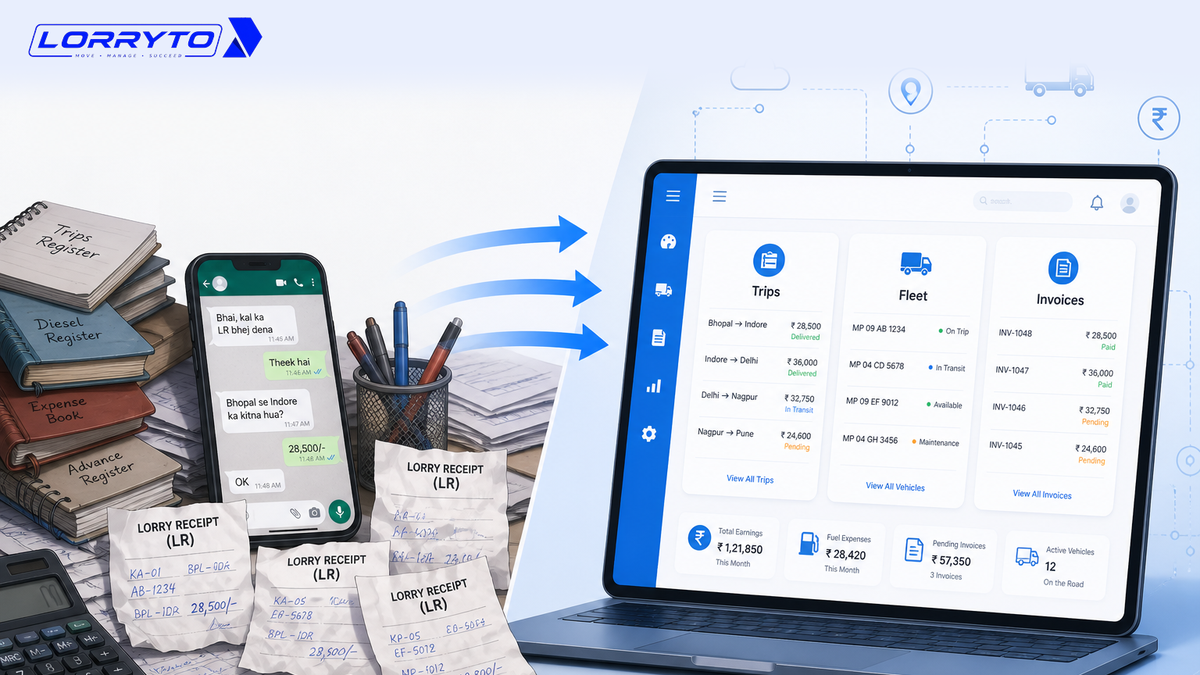
A transporter could manage bookings on a phone call, write an LR manually, keep vehicle expenses in a notebook, follow up for payments over WhatsApp and maintain important documents in folders.
That model still exists. But it is becoming harder to manage as transport businesses grow.
More vehicles mean more trips. More trips mean more documents, expenses, drivers, customers and payments to track. And when all of this information is spread across notebooks, WhatsApp conversations, Excel files and different apps, knowing what is actually happening in the business becomes difficult.
Technology is changing that.
The transformation taking place in Indian logistics is not only about autonomous trucks, artificial intelligence or sophisticated warehouses. Some of the most meaningful changes are much closer to the day-to-day work of a transporter.
The Indian logistics industry is becoming more digital
India’s logistics ecosystem has been steadily moving towards digital integration.
The National Logistics Policy identified digitisation, automation, better tracking and streamlined processes as important parts of improving the country’s logistics ecosystem. One of the major initiatives under this broader push is the Unified Logistics Interface Platform (ULIP), which was created to connect logistics-related digital systems and make information exchange easier across the sector.
The scale of this digital infrastructure has also grown significantly.
In March 2025, the Government of India announced that ULIP had crossed 100 crore API transactions. At that point, according to the Press Information Bureau, it connected 43 systems across 11 ministries through 129 APIs, with more than 1,300 companies registered on the platform.
This is an important signal.
Technology is no longer sitting outside India’s logistics ecosystem. It is increasingly becoming part of the infrastructure through which logistics businesses operate.
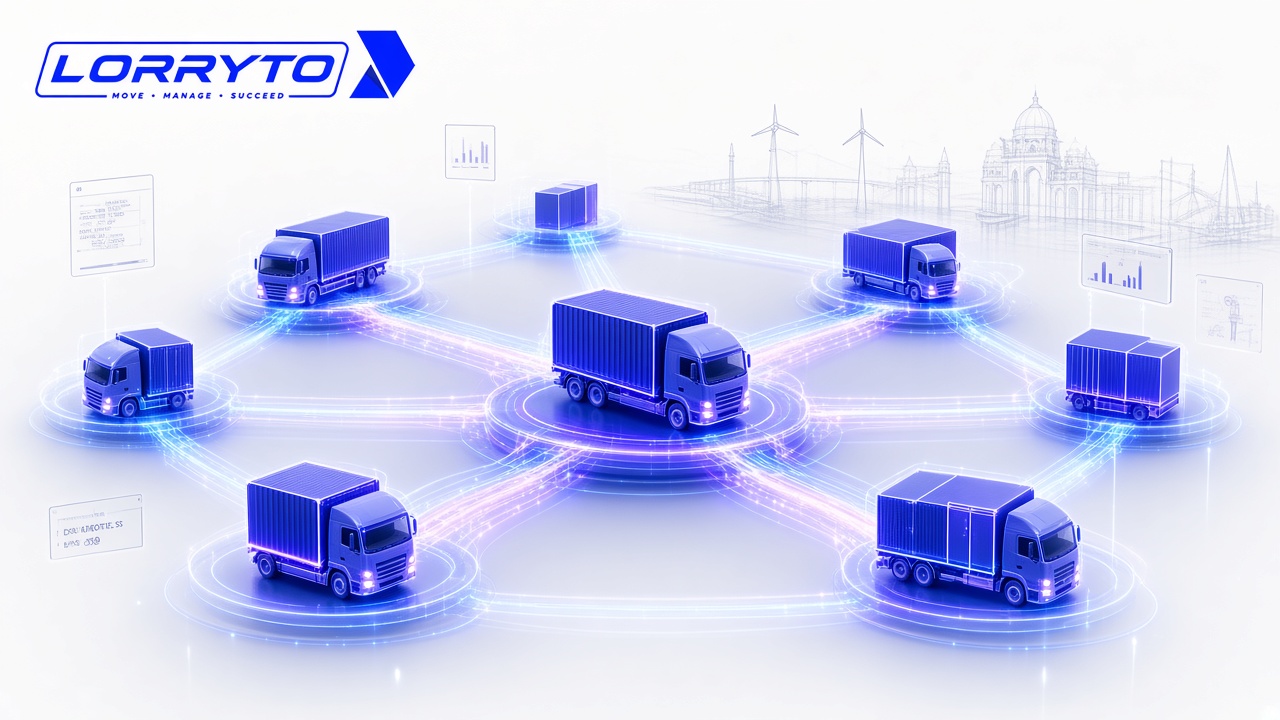
From paperwork to digital transport operations
One of the most obvious changes is the shift from paper-based processes to digital workflows.
Consider a typical transport operation.
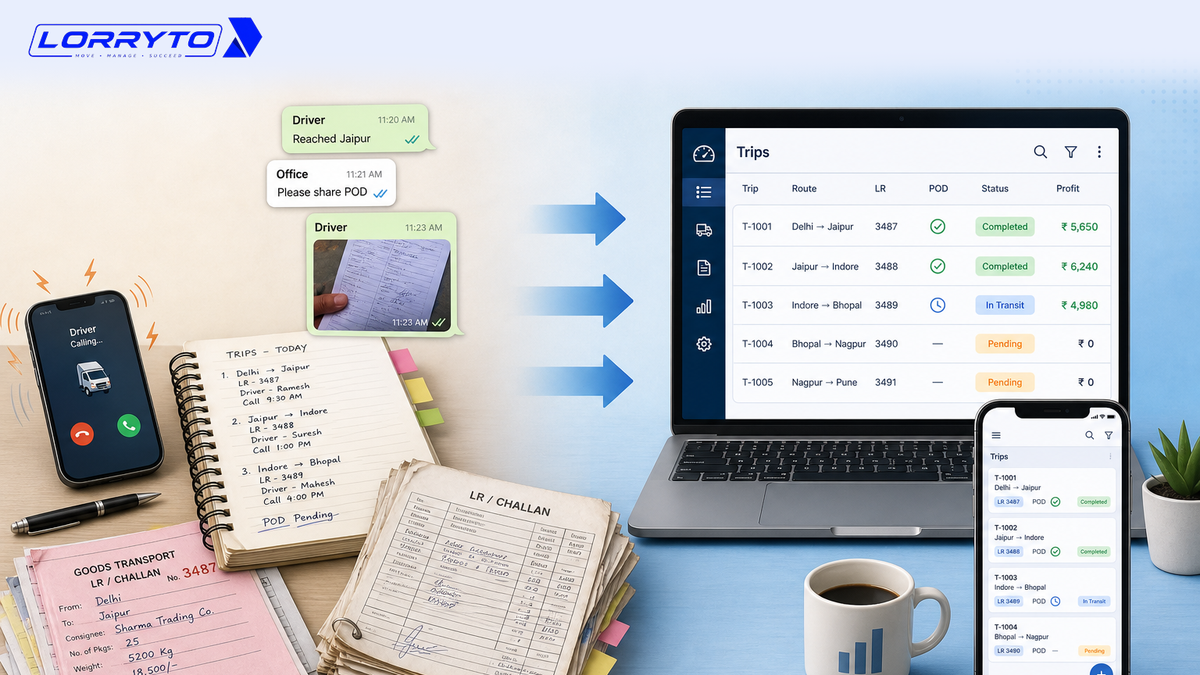
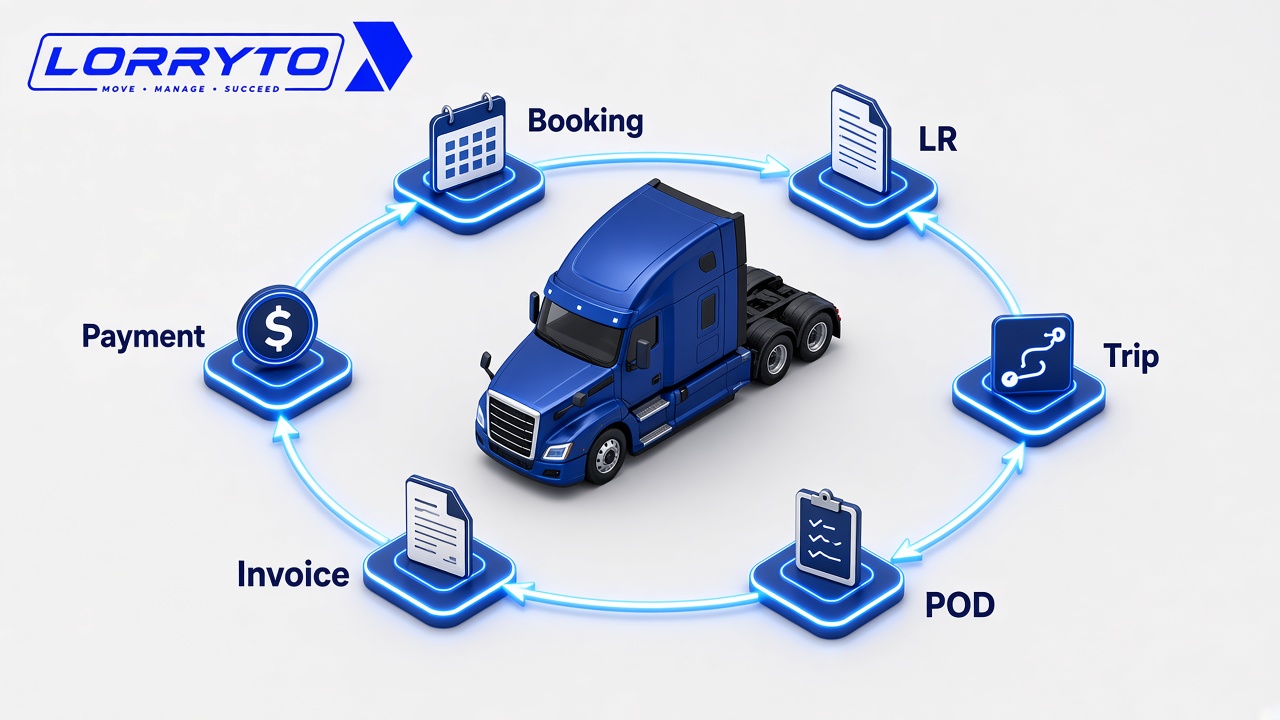
A booking is received. A vehicle is assigned. An LR is created. The driver receives trip information. The vehicle moves. Documents are exchanged. Delivery is completed. A POD is collected. An invoice is raised. Payment is followed up.
Every one of these steps creates information.
When that information is managed manually, it becomes difficult to connect one step with the next.
Digital transport management changes the workflow by keeping these activities connected.
Instead of treating the booking, trip, vehicle, driver, documents, invoice and payment as separate pieces of information, businesses can manage them as part of the same operational process — the same direction we covered in why digitisation is transforming Indian transport and creating a digital bilty.
That may sound like a small change, but for a transport company handling hundreds or thousands of trips, it can make a significant difference.
The e-Way Bill is an example of how transport has already changed
India’s logistics industry has already experienced large-scale digitisation through systems such as the GST e-Way Bill.
The e-Way Bill system is an electronic document used for the movement of goods and supports web, mobile, SMS and API-based generation and integration. The system also supports processes such as cancellation, validity extension, transporter changes and consolidated e-Way Bills.
The larger lesson is important.
A transport business can no longer think of technology as simply “an app for tracking trucks.”
Digital systems are increasingly becoming part of the underlying workflow of moving goods across India.
Real-time visibility is becoming a basic expectation
A few years ago, a customer asking, “Where is my truck?” could mean making a phone call to the driver.
Today, expectations are different.
Customers want visibility. Transport managers want visibility. Fleet owners want visibility. And in many cases, the person managing the transport operation may want to know the status of several vehicles without calling each driver individually.
GPS and telematics have made this possible.
Real-time vehicle visibility can help transport businesses understand where vehicles are, identify delays and improve communication with customers — as we explored in digital trip tracking.
But tracking itself is only one part of the equation.
The real value comes when tracking data is connected to the rest of the transport operation.
Knowing where a vehicle is useful.
Knowing which trip it is running, what load it is carrying, what revenue that trip is generating and what expenses are associated with it is much more useful for a business owner.
That is where transport technology is heading.
Technology is making transport data more useful
One of the biggest changes in logistics technology is the shift from simply storing information to actually using information.
A transport company may already have data about trips, vehicle kilometres, diesel and toll expenses, driver payments, customer outstanding, supplier payments, trip revenue, maintenance costs, documents and delivery status.
The challenge is turning all of that information into something the business owner can act on.
For example:
- Which vehicle is actually profitable?
- Which customer has the highest outstanding?
- Which routes are generating better margins?
- How much did a particular trip actually cost?
- How many trips were completed this month?
- Which vehicle documents are about to expire?
- How much money is currently stuck in receivables?
These are not futuristic AI questions.
They are everyday transport-business questions.
And good transport software should make answering them easier.
The move from vehicle tracking to fleet intelligence
This is where fleet technology is evolving.
The first generation of digital fleet systems primarily focused on location.
The next generation is increasingly focused on operations and business performance.
A fleet manager should not have to open five different systems to understand one trip.
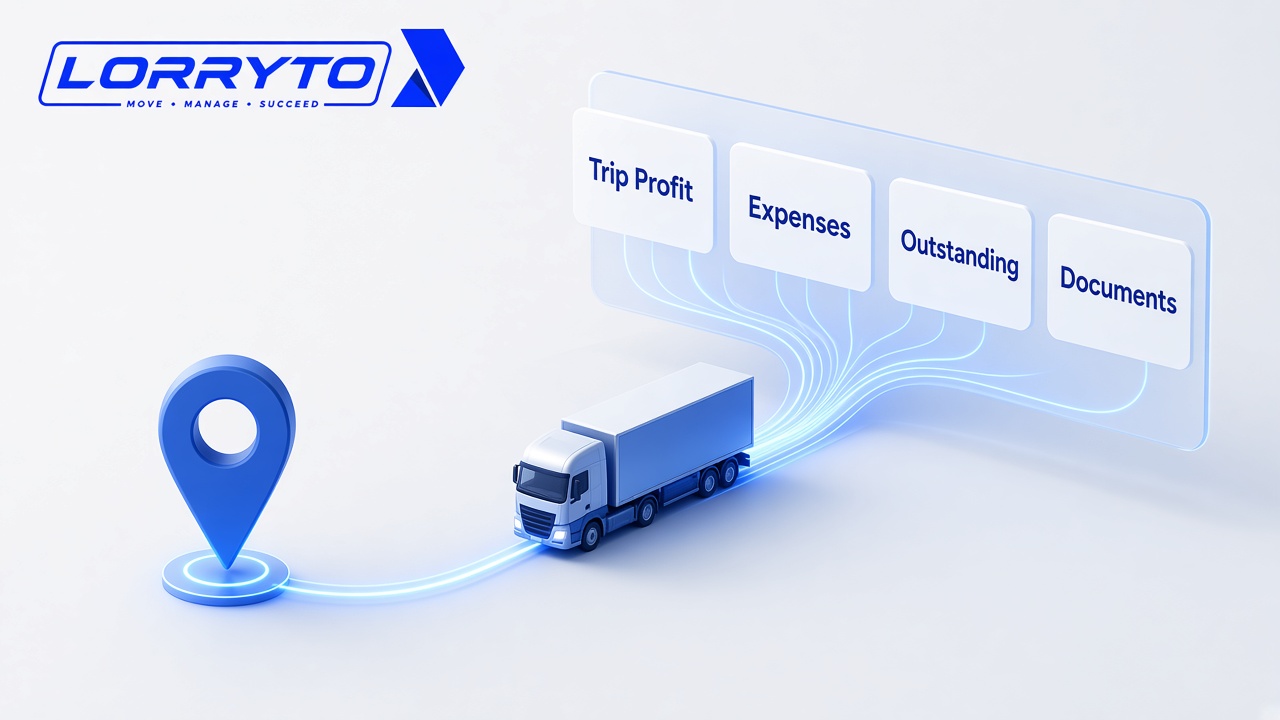
The trip, vehicle, driver, documents, expenses, revenue and payment status should ideally be connected.
This creates a much clearer operational picture.
For example, if a vehicle completes a trip from Mumbai to Ahmedabad, the business should be able to understand not only that the vehicle reached Ahmedabad, but also:
- What was the trip revenue?
- What was spent on diesel and tolls?
- What other expenses were incurred?
- Was the POD uploaded?
- Has the customer been invoiced?
- Has the payment been received?
- And ultimately: Did the trip make money?
That last question is often more important than simply knowing where the truck is — the core idea behind managing trip profit digitally.
Profitability is becoming a technology problem too
Transport has traditionally been a high-volume, relatively low-margin business.
Small differences in fuel consumption, empty kilometres, tolls, delays, maintenance and payment cycles can affect the final profitability of a trip.
This makes accurate operational data increasingly important.
India’s government has also been placing greater emphasis on measuring logistics costs. A 2025 assessment by DPIIT and NCAER, launched with coverage from the Press Information Bureau, estimated India’s aggregate logistics cost at ₹24.01 lakh crore, equivalent to 7.97% of GDP in 2023–24. The study was intended to create a more consistent and data-driven understanding of logistics costs in India.
At the macro level, reducing logistics costs is a national competitiveness issue.
At the transporter level, however, the same principle becomes much simpler:
Know where your money is going.
Better digital records can help businesses identify unnecessary expenses, understand trip margins and make decisions based on actual numbers rather than assumptions.
AI will become useful — but it should solve real problems
Artificial intelligence is now appearing across almost every logistics discussion.
AI can potentially help with demand forecasting, route planning, predictive maintenance, document processing, pricing and other operational decisions.
But there is an important distinction between adding AI to a product and actually making a transport business smarter.
A transporter does not necessarily need an AI chatbot telling them that fuel costs are important.
They need the system to show them that a particular vehicle’s operating cost has increased.
They need an alert when a document is about to expire.
They need a clear view of outstanding payments.
They need to know whether a trip was profitable.
They need information at the right time.
The best logistics technology will therefore not necessarily be the technology with the most features.
It will be the technology that removes the most unnecessary work from the operator’s day.
Digital documentation is reducing friction
Documentation is another area where technology is making a difference.
Transport operations involve LRs, invoices, PODs, vehicle documents, driver documents and several other records.
Managing these documents manually can create problems when a company needs to find an old document quickly.
Digital document storage changes this.
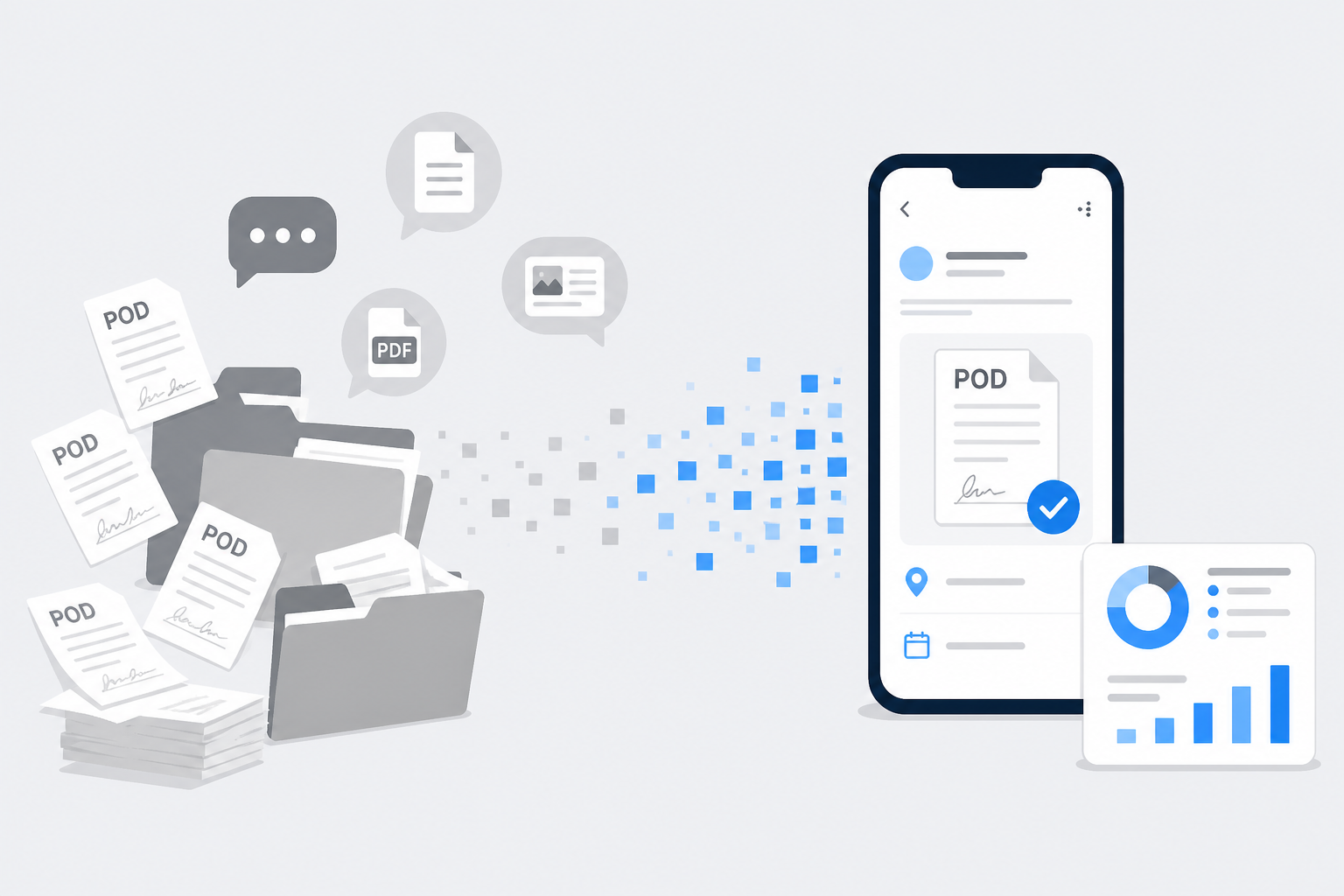
Instead of asking someone to search through physical files or old WhatsApp messages, businesses can keep trip-related documents connected to the relevant operational record — including digital POD management.
This becomes particularly valuable as the number of trips increases.
The objective is not simply to “go paperless.”
The real objective is to make information available when it is needed.
Payments and outstanding management are part of logistics too
There is another side of transport technology that often receives less attention: money.
A trip may be completed successfully, but the business is not finished until the associated payment is collected.
For transport companies, outstanding receivables can have a direct impact on working capital.
A digital system can bring customer balances, invoices and payment information into one place, making it easier to understand what is pending.
This is an important shift in thinking.
Transport management is not only about moving a truck from Point A to Point B.
It is about managing the entire commercial journey of a trip.
India’s next logistics transformation will be connected
The future of logistics technology in India is unlikely to be one single application doing everything.
Instead, different layers of technology will increasingly connect with each other: government platforms, GST and e-Way Bill systems, fleet and GPS platforms, transport management software, banking and payment systems, customer platforms, warehouse systems, charging infrastructure, and AI and analytics.
The direction is towards greater interoperability and better flow of information.
India’s National Logistics Policy and ULIP are examples of this broader push towards an integrated digital logistics ecosystem. The same ecosystem logic is visible in newer freight initiatives such as PACT and the ZET Marketplace for electric freight — different problems, same need for coordination.
What this means for Indian transporters
For a large logistics company, digital transformation may involve sophisticated platforms, integrations and analytics teams.
For a small or mid-sized transporter, it can start much more simply:
- Move the booking register into software
- Create LRs digitally
- Track vehicles
- Store documents
- Record expenses
- Monitor outstanding payments
- Understand trip profitability
- Keep vehicle and driver information organised
Once these basic processes are connected, the business starts generating something it previously lacked: usable operational data.
And that data can become the foundation for better decisions.
The Lorryto perspective
For Lorryto, this is the most important part of the technology shift.
The objective of transport software should not be to make transporters spend more time inside software.
It should be the opposite.
The system should reduce calls, paperwork, manual calculations and scattered information so the transporter can spend more time running the business.
That means bringing everyday activities such as booking, LR management, trips, vehicle tracking, documents, expenses, payments and profitability into one connected workflow.
For example, platforms such as Lorryto help transport businesses track vehicle locations when drivers share GPS and manage trip and vehicle-level revenue and expenses on the Vehicles list.
Technology should ultimately answer a simple question for the transporter:
“What is happening in my transport business right now?”
And the answer should not require opening multiple registers, calling several people or searching through old WhatsApp messages.
The road ahead
India’s logistics industry is too large and too complex to be transformed by one technology.
But the direction is becoming clear.
The industry is moving from paper to digital records.
From periodic updates to real-time visibility.
From isolated information to connected workflows.
From tracking vehicles to understanding fleet performance.
From intuition-based decisions to data-backed decisions.
And eventually, from simply recording what happened to predicting what should happen next.
Technology will not replace the experience of a good transporter.
It can, however, give that experience better information to work with.
That may ultimately be the real technology revolution in Indian transport — not futuristic trucks or complicated dashboards, but a transport business where the right information reaches the right person at the right time.
For an industry that moves almost everything India consumes, manufactures and trades, that change could be as important as the trucks themselves.
If you are still connecting bookings, trips, documents and payments into one usable picture — getting started with Lorryto is a practical place to begin.
Related reading
- Why Digitization Is Transforming the Transport Industry in India
- How to Manage Every Trip Tracking Digitally for Indian Transporters
- Digital POD Management for Indian Transporters
- How to Manage Every Trip Profit Digitally for Indian Transporters
- India’s Electric Freight Transition Enters a New Phase with PACT and the ZET Marketplace
- Vehicles list — location, KPIs, and fleet visibility
Ready to run trips without registers?
Create LRs, track payments, and keep documents in one place with Lorryto — free trial available.
Start Free Now