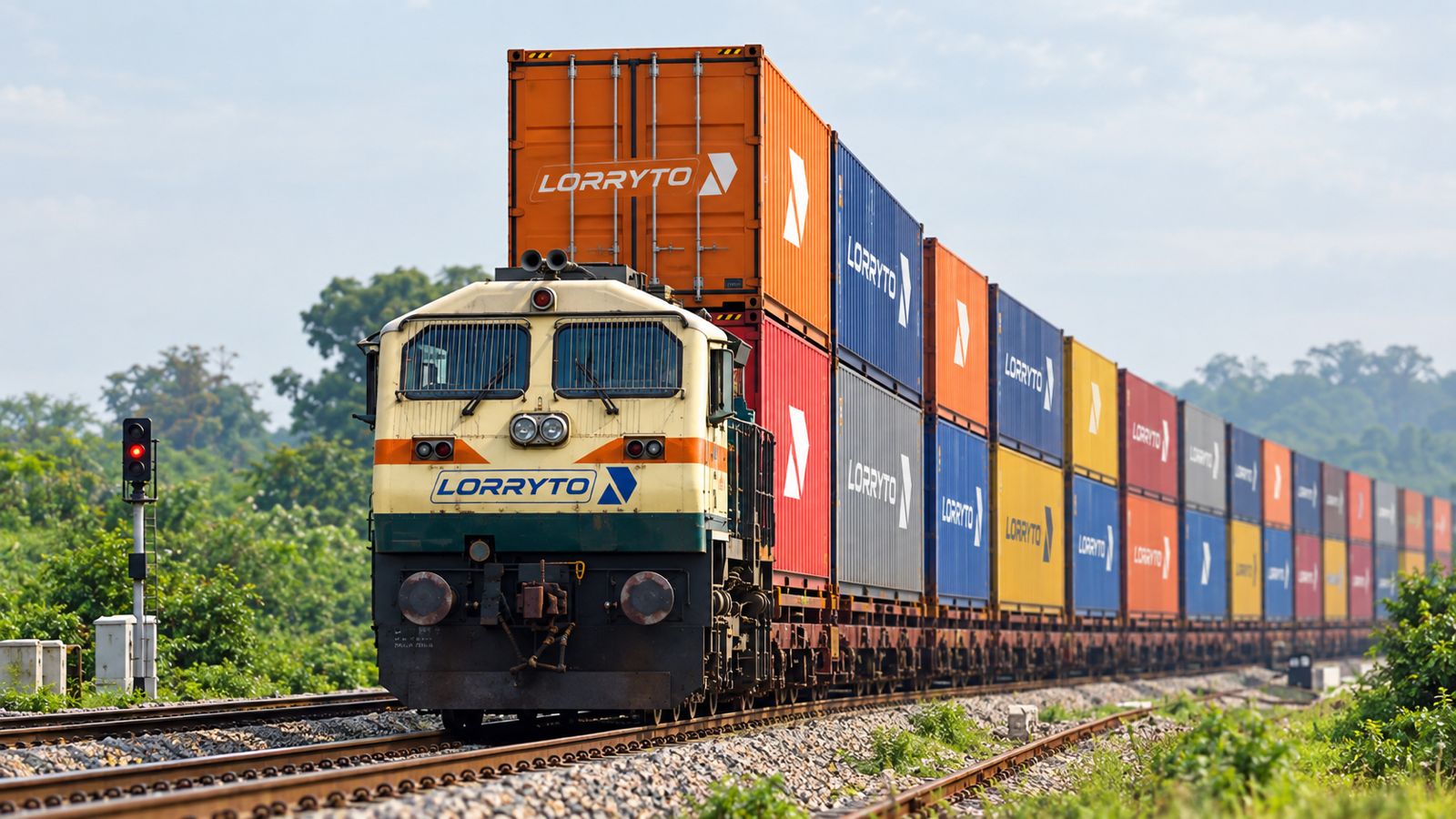
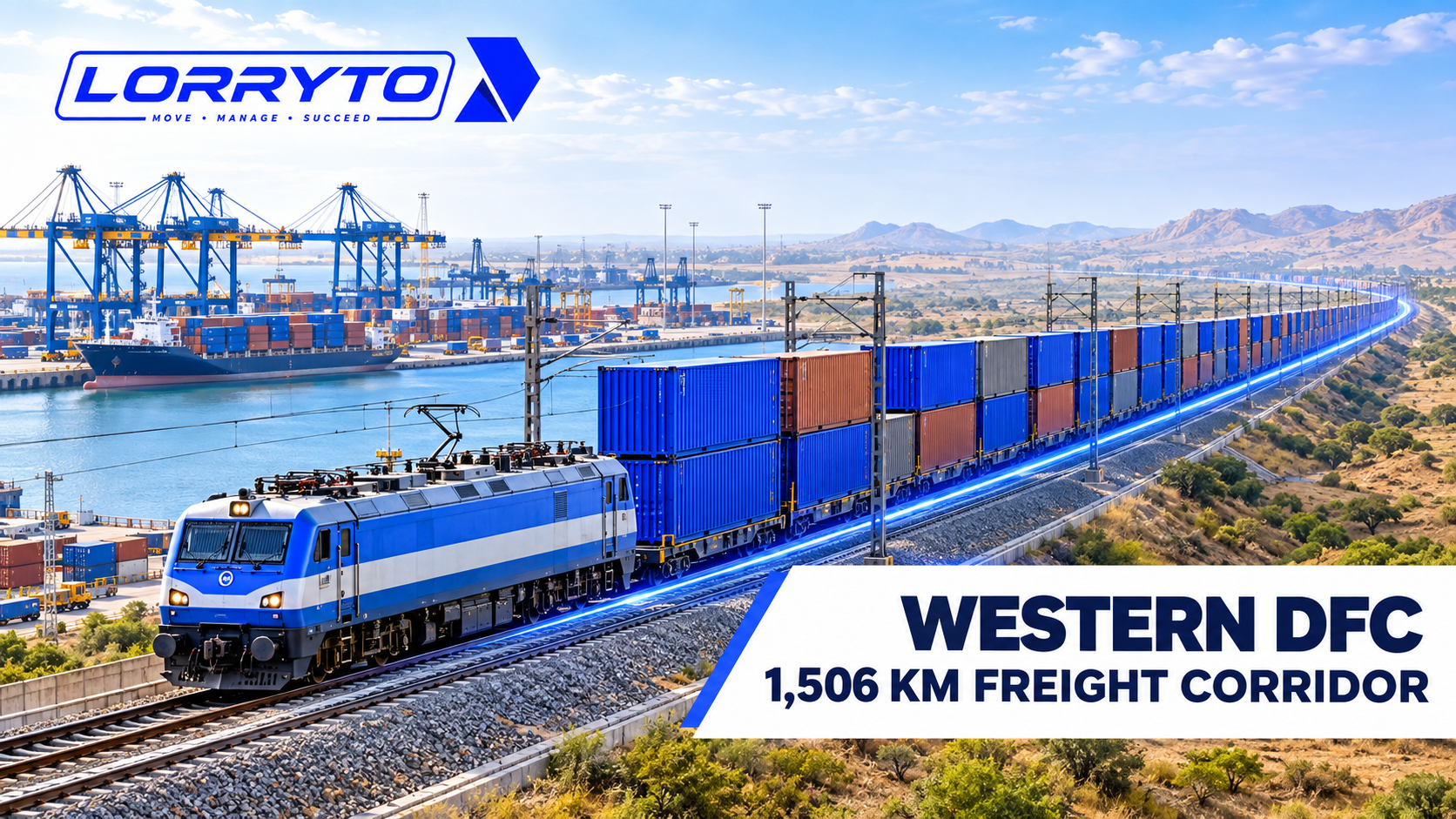
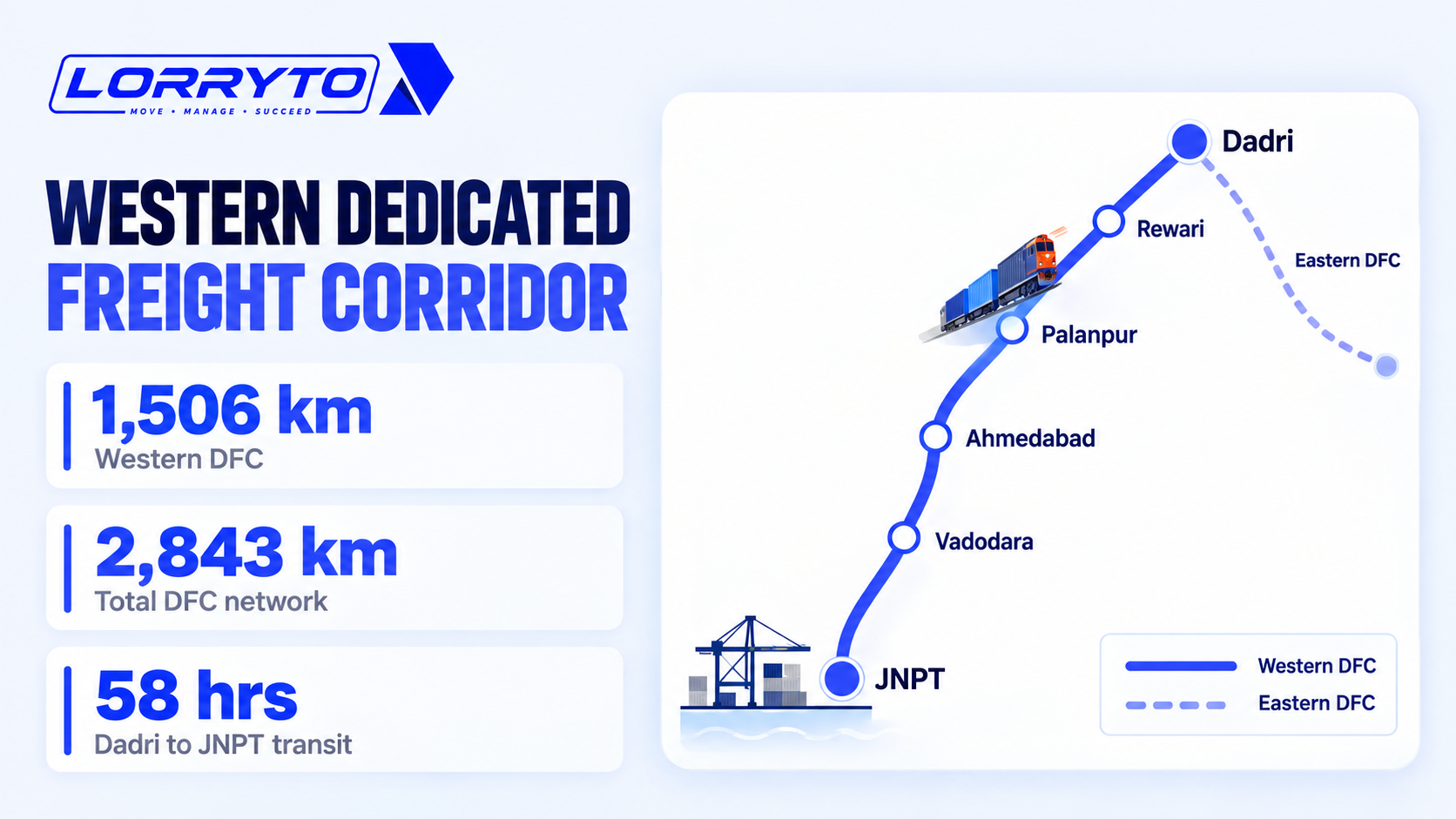
India’s freight and logistics landscape has reached an important milestone: the 1,506-kilometre Western Dedicated Freight Corridor (WDFC) is now fully operational, connecting Jawaharlal Nehru Port (JNPT) in Navi Mumbai with Dadri in Uttar Pradesh.
The corridor is built exclusively for freight trains, separating a large share of goods traffic from the conventional, passenger-heavy railway network. Its completion strengthens the link between India’s western ports, its industrial belts and the manufacturing and consumption markets of the north.
This is more than another railway project. It changes how cargo can move along some of India’s busiest logistics routes — with real implications for container transport, port connectivity, industrial supply chains, freight capacity and multimodal logistics.
According to the Japan International Cooperation Agency (JICA), which financed much of the project, the WDFC reached completion and full operationalisation on 8 September 2026, when the final three sections — New Sanand North–New Makarpura, New Umbergaon–New Saphale and New Saphale–New JNPT — were dedicated to the nation. Together those sections cover 326 km and were built at a cumulative cost of about ₹20,703 crore.
What is the Western Dedicated Freight Corridor?
The Western Dedicated Freight Corridor is a purpose-built freight railway designed to run goods trains separately from passenger-focused traffic.
It runs about 1,506 kilometres between JNPT and Dadri, passing through Maharashtra, Gujarat, Rajasthan, Haryana and Uttar Pradesh. Along the way it connects important freight and industrial locations including Vadodara, Ahmedabad/Sanand, Palanpur, Marwar, Kishangarh, Phulera, Rewari and Dadri.
The Dedicated Freight Corridor Corporation of India Limited (DFCCIL), under the Ministry of Railways, is responsible for building and operating India’s dedicated freight corridor network.
The original objective was simple: create extra rail capacity specifically for freight, while making goods movement faster, more reliable and more efficient.
Why was a dedicated freight corridor needed?
India’s conventional railway network has always had to carry both passenger and freight trains on the same tracks.
As passenger, suburban and long-distance services grew, freight trains increasingly had to wait for paths. On the Mumbai–Delhi and Howrah–Delhi trunk routes, line capacity utilisation ran at roughly 115% to 150%, according to the Indian Express. That saturation held back rail’s share of freight.
A dedicated network changes that equation. Freight gets infrastructure designed around heavier, longer goods trains. The Ministry of Railways lists the salient features of the DFCs as:
- Maximum permissible speed of 100 km/h
- Long-haul trains with trailing loads of up to 13,000 tonnes
- Double-stack container trains on the Western DFC
- Enhanced axle load of 25 tonnes
- Automatic signalling with mobile train radio communication
- Freight terminals with more efficient handling
So the value of the WDFC is not just its length. It comes from the capacity, connectivity and operating characteristics of the network.
JNPT to Dadri: connecting ports with northern markets
One of the most significant aspects of the WDFC is its direct link between JNPT and the northern Indian hinterland.
JNPT is one of India’s major container gateways. Cargo arriving through western ports has to reach factories, distribution centres, inland container depots (ICDs) and consumer markets across the north. The completed corridor gives that movement a dedicated rail path.
Traffic on the western corridor mainly consists of ISO containers from JNPT and Mumbai Port in Maharashtra and Pipavav, Mundra and Kandla in Gujarat, heading to ICDs such as Tughlakabad (Delhi), Dadri (Uttar Pradesh), Dhandari Kalan (Punjab) and Khatuwas (Rajasthan), according to the Indian Express.
A container arriving at a western port is only at the start of its journey. The efficiency of the inland leg — port to depot, depot to warehouse, warehouse to customer — shapes the cost and reliability of the whole supply chain.
What changes now that the WDFC is fully operational?
1. More dedicated capacity for freight
The most basic benefit is extra railway capacity built specifically for freight.
Moving freight onto dedicated tracks also frees capacity on the conventional network. The Ministry of Railways has stated that the DFCs have created additional paths on the conventional network by diverting freight traffic to the Eastern and Western corridors, allowing Railways to run more goods and passenger services with better punctuality.
That is a network-wide benefit, not just an improvement on one route.
2. Faster and more predictable cargo movement
Freight is not only about distance travelled. For businesses, predictability matters.
A delayed shipment affects production schedules, inventory, warehousing, vehicle deployment and customer deliveries.
With the Mumbai section complete, the average freight transit time between Dadri and JNPT has fallen from about 66 hours to about 58 hours, according to a DFCCIL director quoted by Financial Express. Actual journey times will still vary with operations and cargo.
Saving several hours per movement becomes commercially meaningful when multiplied across thousands of trains. Railways data cited by the Indian Express also puts average train speeds on the DFCs at over 50 km/h — roughly double the average for freight trains on the non-DFC network.
3. Double-stack container operations
One of the distinctive features of the Western DFC is its ability to run double-stack container trains — two containers stacked vertically on each wagon rather than one.
That means more cargo per train movement and fewer train movements for the same volume. For India’s container logistics, where western ports handle a large share of international trade, this is particularly important.
4. Direct port connectivity
Large parts of the WDFC were already running before September 2026. What the final Maharashtra sections added was the direct connection to JNPT.
For importers, exporters, shipping lines and logistics operators, that direct rail link strengthens the connection between the port and inland markets — and JICA notes it is also expected to help decongest Mumbai’s railway network.
WDFC and the 2,843-km dedicated freight network
The Western DFC becomes even more significant alongside the Eastern Dedicated Freight Corridor (EDFC).
The EDFC runs about 1,337 kilometres from Ludhiana to Sonnagar, while the WDFC covers about 1,506 kilometres from JNPT to Dadri. Together they form a dedicated freight network of about 2,843 kilometres, a figure the Ministry of Railways also uses for the combined network.
The two corridors meet in the Dadri region, linking India’s western ports with the northern and eastern freight network.
Their roles differ. The EDFC mostly carries coal and mineral traffic from eastern India, while the WDFC has a strong role in containerised and other freight connected to India’s western ports.
Together, they form the backbone of a more integrated freight railway network. For how this changes the day-to-day role of trucks, see our earlier piece on what the Dedicated Freight Corridors mean for truckers.
What types of cargo can benefit?
The WDFC is particularly relevant for:
- Containerised cargo
- Automobiles and automotive components
- Industrial and manufactured goods
- Fertilisers
- Foodgrains
- Salt
- Cement
- Iron and steel
- Coal and other bulk commodities
The exact mix varies by route and terminal, but the corridor is designed for high-volume freight.
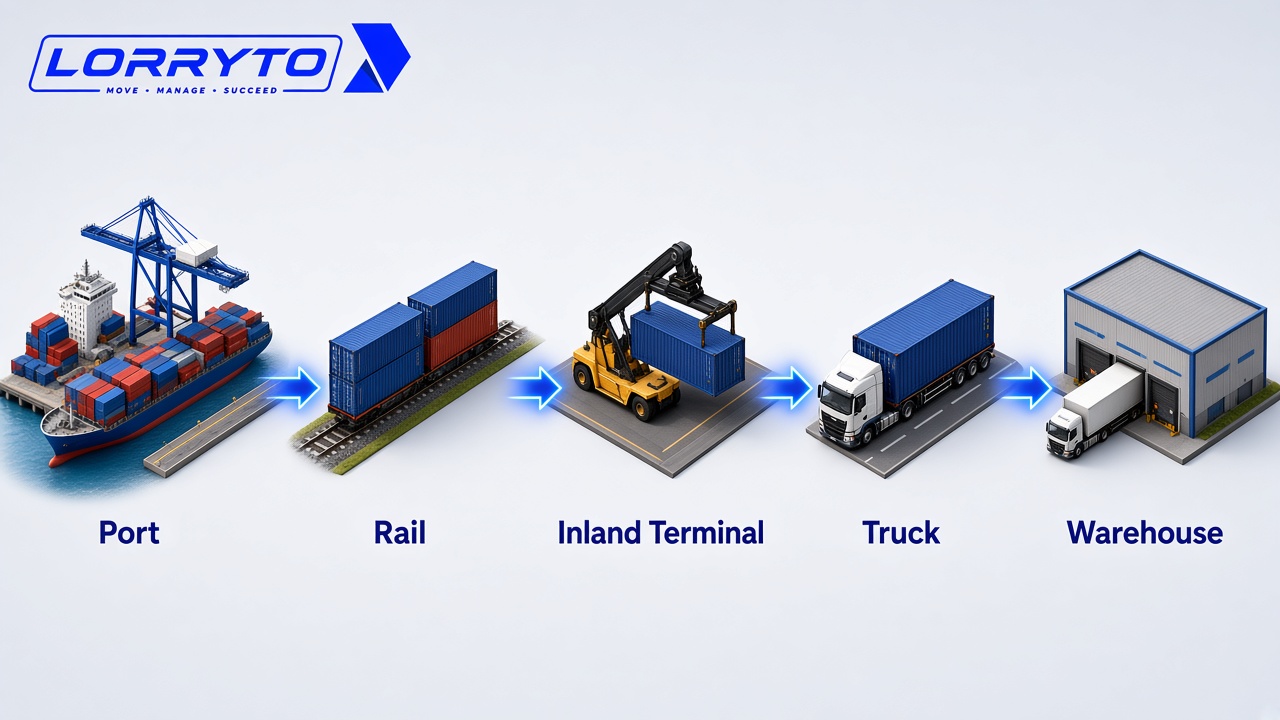
This is also where multimodal logistics matters. Rail does not replace road transport. The most efficient model usually combines several modes:
Port → Rail → Inland terminal → Truck → Warehouse / Customer
The WDFC strengthens the rail link in that chain.
The growing importance of cargo terminals
A railway corridor only delivers its full value when cargo can get on and off the network efficiently. That makes freight terminals, inland container depots, logistics parks and road connections critical.
To add cargo-handling capacity, the Ministry of Railways launched the Gati Shakti Multi-Modal Cargo Terminal (GCT) policy in December 2021, encouraging industry to invest in new rail cargo terminals with mechanised loading and unloading. By March 2025, 97 GCTs had been commissioned and in-principle approvals issued for 277 more proposals, according to the Ministry of Railways.
The point is simple: the future of Indian freight is not only about railway tracks. It is about an interconnected ecosystem of:
Ports + Rail + Terminals + Highways + Warehouses + Technology + Transport operators
What does this mean for road transporters?
Growth in dedicated rail freight does not make road transport less important. In most supply chains, rail and road do different jobs.
Rail is strong for long-distance movement of large volumes. Road remains essential for first-mile and last-mile connectivity. A container may travel a thousand kilometres by rail, but it still needs a truck to reach the final warehouse.
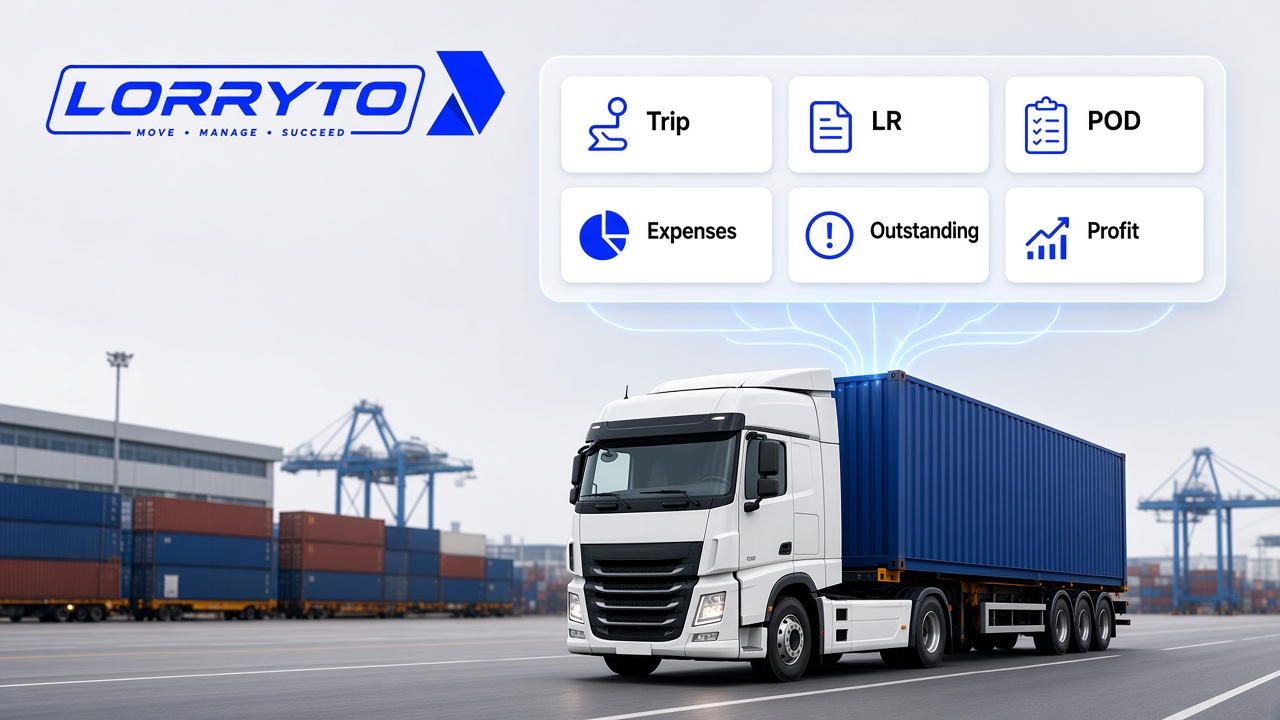
That creates an opportunity for transport companies to think beyond individual truck trips and run their operations as part of a larger logistics network. As freight corridors improve, transporters will increasingly need clear visibility over:
- Vehicle availability and trip status
- LR and booking information
- Driver assignments
- Delivery documents and POD collection
- Freight, expenses and trip profitability
- Customer outstanding and supplier payments
- Vehicle documents
Shorter, more frequent terminal-to-customer trips make this harder to manage on paper — which is why digital trip tracking matters more as rail volumes grow.
Technology is the next layer of India’s freight transformation
Infrastructure creates capacity. Technology creates visibility. A modern freight ecosystem needs both.
A transporter may have trucks running between ports, terminals, factories and warehouses, but without proper digital records it is still hard to answer basic questions:
- Where is the vehicle?
- Has the LR been generated?
- Has the material been delivered, and where is the POD?
- How much has the trip cost?
- Has the customer been invoiced, and what is still outstanding?
- And most importantly: did the trip actually make money?
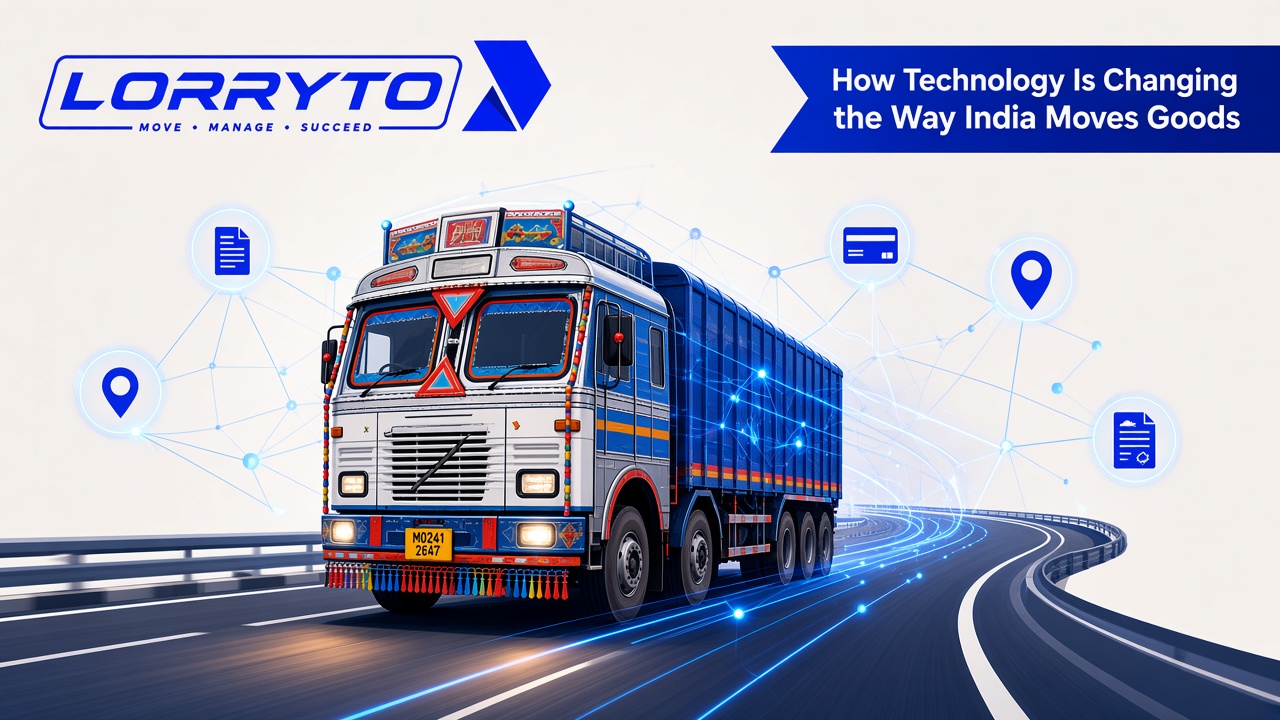
Digital transport management connects these individual events into one workflow — the same shift we described in how technology is changing the way India moves goods.
This is where platforms such as Lorryto can help. They don’t change the physical freight network. They help operators manage the business layer around it — LRs, trips, PODs, invoices, expenses and payments in one place. For example, Lorryto helps transport businesses track vehicle locations when drivers share GPS and manage trip and vehicle-level revenue and expenses on the Vehicles list.
The bigger picture: from freight corridors to logistics corridors
The WDFC should not be seen only as a railway project. Its larger significance lies in the logistics corridors that can grow around it.
A logistics corridor combines physical infrastructure with supporting services:
Dedicated rail + Ports + Highways + Cargo terminals + Warehouses + Digital systems
When these pieces work together, cargo moves with fewer bottlenecks and better visibility. For manufacturers, exporters, importers and logistics companies, that can influence decisions about inventory, warehouse locations, transport modes and distribution networks — and encourage industrial and logistics clusters around key corridor nodes.
What comes next for India’s freight network?
Completing the WDFC and EDFC is a major milestone, but it is not the end of the story.
The Ministry of Railways has prepared detailed project reports for further corridors, including an East-Coast corridor (Kharagpur–Vijayawada), an East-West corridor and a North-South sub-corridor (Vijayawada–Nagpur–Itarsi), though none had been sanctioned as of March 2025. In the 2026 Union Budget, the government announced a new Dankuni–Surat corridor, for which a detailed project report is being prepared, according to the Indian Express.
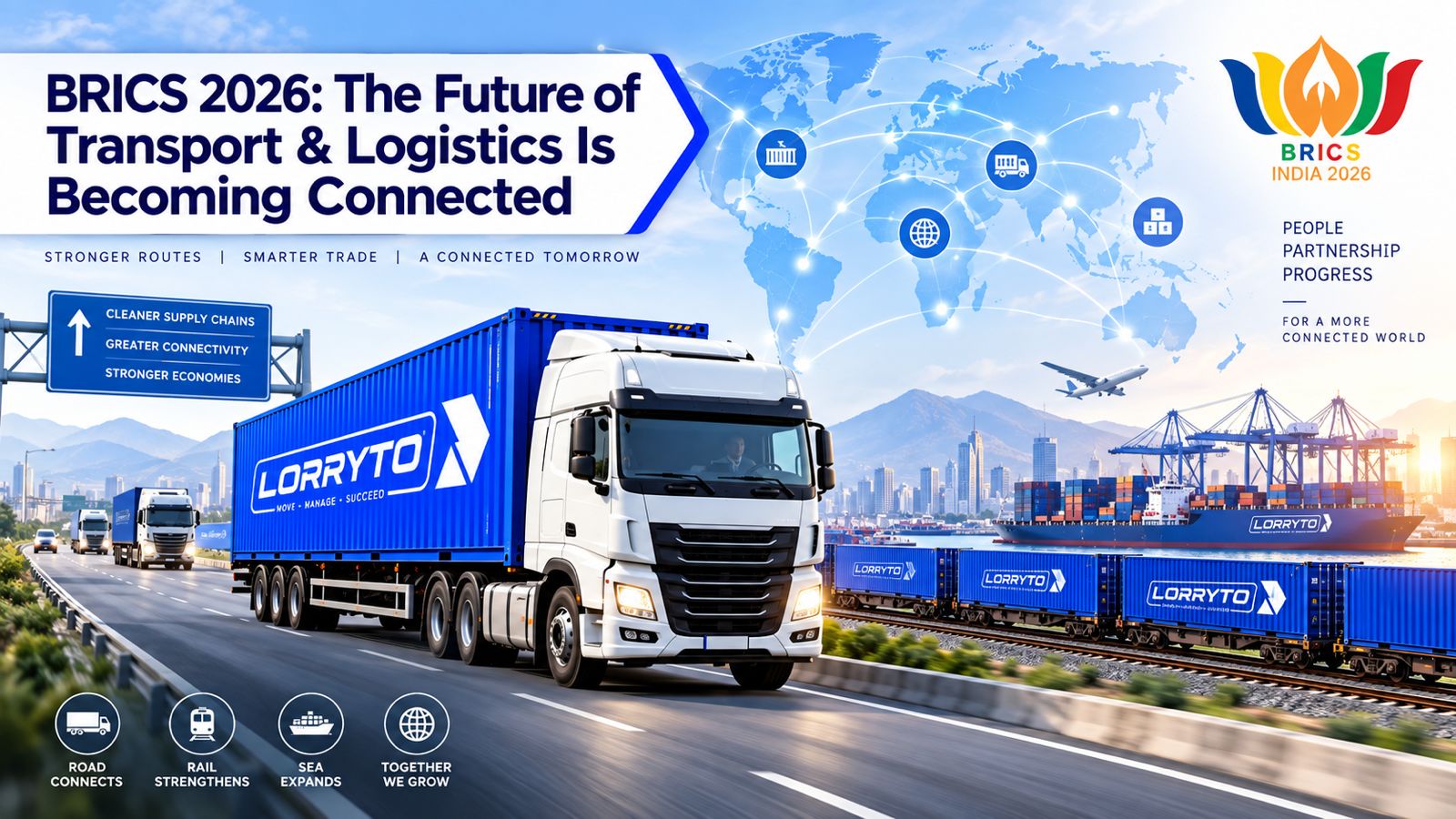
If more corridors are built, India’s freight railway network could become far more interconnected — part of a wider policy push towards multimodal, resilient logistics that also featured in the BRICS Transport Ministers’ Declaration 2026.
The long-term goal is not just faster trains. It is a more efficient movement of goods end to end.
Conclusion
The full operationalisation of the 1,506-km Western Dedicated Freight Corridor between JNPT and Dadri is a major development for India’s logistics infrastructure.
With dedicated freight capacity, double-stack container capability, direct port connectivity and integration with the 1,337-km Eastern corridor, India now has a 2,843-km dedicated freight network linking its major freight regions.
Its real impact will be measured not only in kilometres of track, but in what happens around it: faster cargo flows, better terminal connectivity, smarter supply-chain planning and clearer visibility at every stage of a shipment.
And as India’s physical freight infrastructure becomes more sophisticated, the digital infrastructure transporters use will matter just as much.
The future of logistics will not be rail versus road. It will be about how rail, road, ports, terminals, warehouses and technology work together as one connected supply chain.
If you are still building the trip, POD and payment visibility that a multimodal network demands — getting started with Lorryto is a practical place to begin.
Related reading
- India’s Freight Rail Network Is Changing Road Transport: What the Dedicated Freight Corridors Mean for Truckers
- How Technology Is Changing the Way India Moves Goods
- BRICS Transport Ministers’ Declaration 2026: What It Means for Logistics and Transport
- How to Manage Every Trip Tracking Digitally for Indian Transporters
- Digital POD Management for Indian Transporters
- Vehicles list — location, KPIs, and fleet visibility
Sources: JICA — WDFC completion · PIB — DFC status, paths and Gati Shakti terminals · PIB — Salient features of DFCs · DFCCIL · Indian Express — 2,843-km network explained · Financial Express — WDFC transit-time impact
Ready to run trips without registers?
Create LRs, track payments, and keep documents in one place with Lorryto — free trial available.
Start Free Now